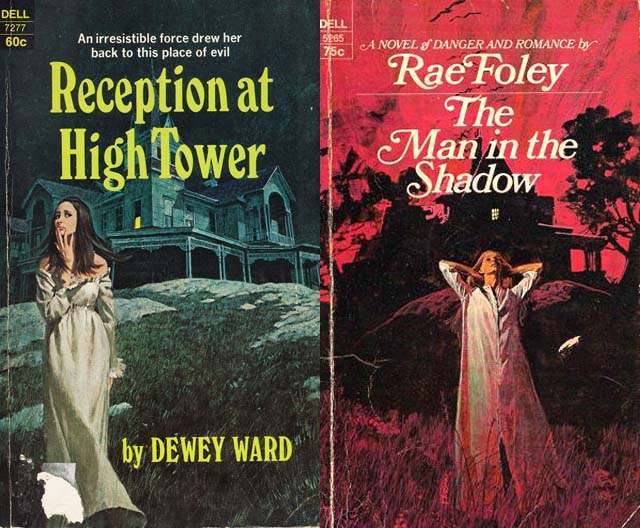
Moonlit mansions loom behind solitary figures in flowing white gowns, their bodies poised between flight and fascination in the classic language of Gothic romance cover art. On one side, the title “Reception at High Tower” hangs over a shadowed, many-gabled house, while a woman stands with a finger to her lips as if guarding a secret the building itself has taught her to keep. Opposite it, “The Man in the Shadow” by Rae Foley sinks into a blood-red dusk, where another woman lifts her hands toward her head, framed by tall grass and the silhouette of a threatening estate.
What makes the “woman running from the house” motif so psychologically sticky is its double message: the home is both shelter and trap, desire and danger, memory and menace. Gothic covers often place the heroine in the liminal space of the yard or the road, not yet safe but not fully claimed, and that in-between tension invites readers to project their own fears onto the architecture. The dramatic lighting, exaggerated shadows, and stark white clothing function like visual shorthand for vulnerability—an easy, immediate hook that promises suspense and romance in the same breath.
For collectors, designers, and fans of pulp-era paperback illustration, imagery like this is a crash course in how cover art sells emotion before a single page is turned. The typography, color choices, and haunted-house silhouettes are doing as much storytelling as the figures themselves, turning a simple retreat into an irresistible call back toward “this place of evil.” If you’re exploring Gothic romance covers, vintage book art, or the symbolism of women fleeing ominous houses, these paired designs offer a vivid example of why the trope endures—and why it still feels like a dare to step inside.