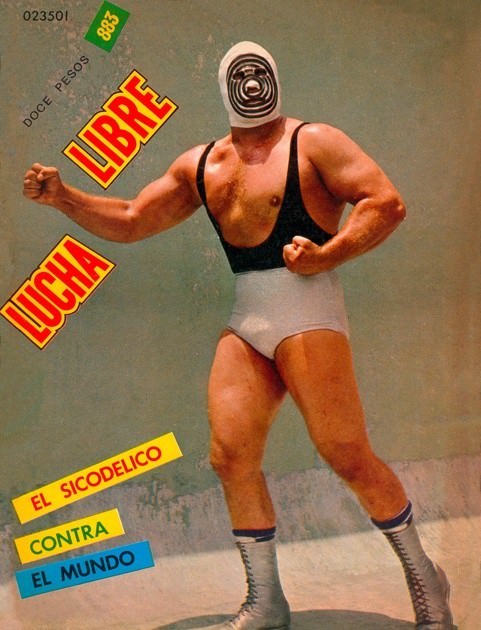
Bold color blocks and oversized lettering leap off this Lucha Libre cover, framing a masked wrestler in a squared, ready stance that feels halfway between a pin-up and a challenge. The design is spare but loud: a plain backdrop, the fighter centered, and the title “LUCHA LIBRE” slashed diagonally like a promoter’s shout across a crowded arena. Even without ringside context, the pose and typography sell the fantasy—strength, mystique, and the promise of spectacle.
A black-and-white spiral mask turns the athlete’s face into an optical trick, pushing the character beyond ordinary identity and into the mythic territory that defines Mexican wrestling. The two-tone gear, high boots, and clenched fists underline the era’s straightforward visual language: show the body, hide the person, and let the mask do the storytelling. It’s the kind of cover art that made newsstand browsers stop cold, offering a single, instantly readable hero (or villain) before the first page is turned.
Text on the cover teases a narrative of conflict—“EL SICODÉLICO CONTRA EL MUNDO”—a classic hook that frames the luchador as a lone force facing everyone at once. For collectors and fans tracing 1970s lucha libre magazine covers, pieces like this reveal how print media amplified the ring’s drama with graphic simplicity and pulp energy. The result is a time capsule of pop culture and sports entertainment, where blood-and-glory mythology could be packaged in ink, color, and a mask that refuses to blink.