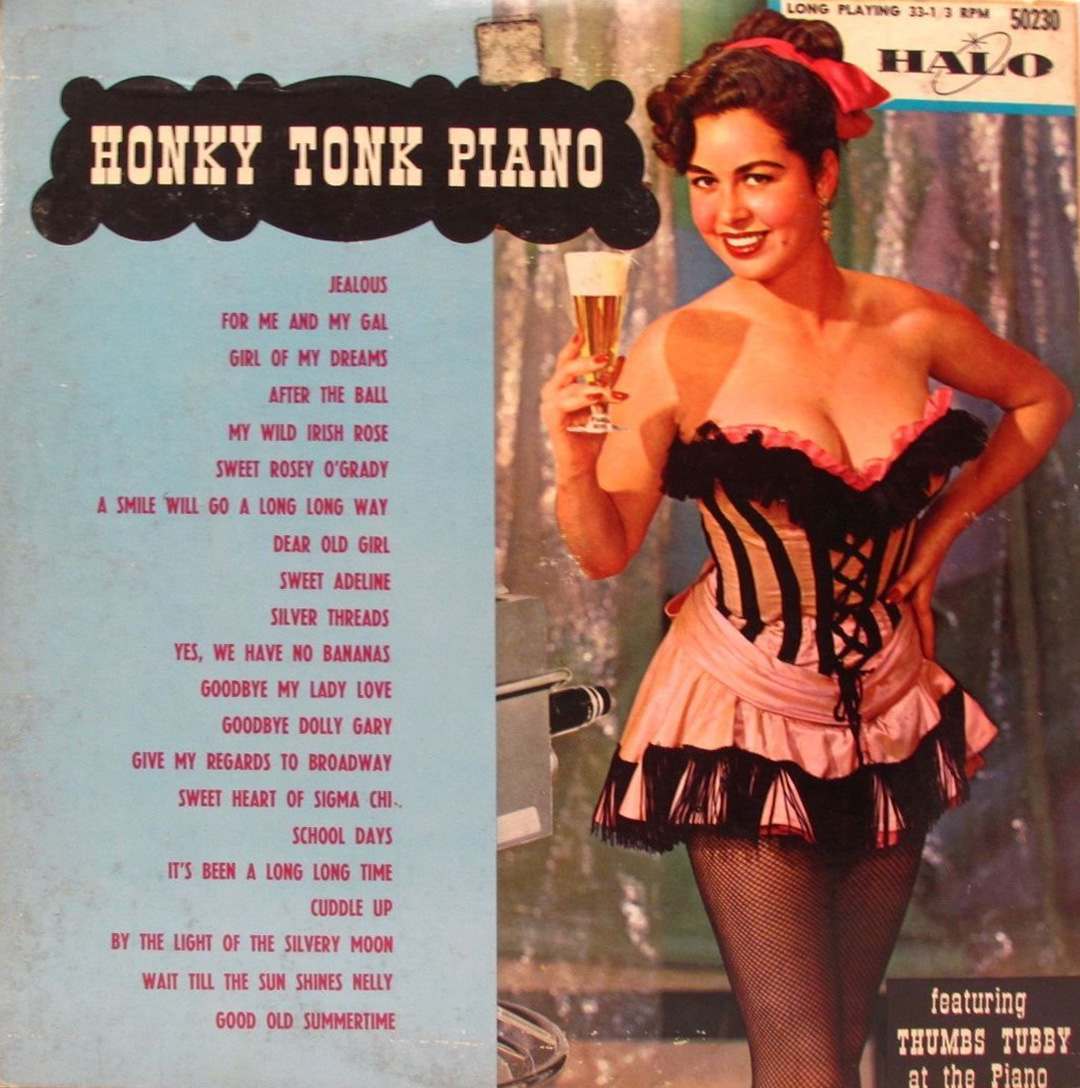
Honky-tonk cover art rarely bothered with subtlety, and “Honky Tonk Piano” leads with a bold, saloon-style title block that promises noise, beer, and a good-time soundtrack. The design splits its attention between nightclub glamour and jukebox practicality: a long list of familiar party standards runs down the left, advertising the sing-along repertoire as plainly as a bar menu. Even the small-print details—“LONG PLAYING 33-1/3 RPM,” the “HALO” label mark, and the catalog number—anchor it firmly in the mid-century record-buying world where the sleeve had to sell the mood at a glance.
On the right, a pin-up figure raises a foamy glass, posed in lingerie-inspired stagewear with a bright hair bow and fishnets, performing the era’s cheeky idea of “naughty but nice.” The backdrop reads like a backstage corner or club interior, while a microphone and the hint of a piano setup reinforce the performance fantasy the title suggests. It’s marketing by atmosphere: one look and you can almost hear the percussive keys, the laughter over the music, and the late-night patter between tunes.
Beneath the playful packaging sits a telling snapshot of how honky-tonk records were branded—pianos, pin-ups, and party tunes fused into a single promise of escapist entertainment. For collectors and design fans, sleeves like this are a time capsule of vintage LP cover art, where typography, color, and showgirl imagery did as much work as the music inside. If you’re exploring the wild world of honky-tonk record covers, this one offers a perfect case study in how a “piano album” could be sold as an evening out, shrink-wrapped for the record shop bin.