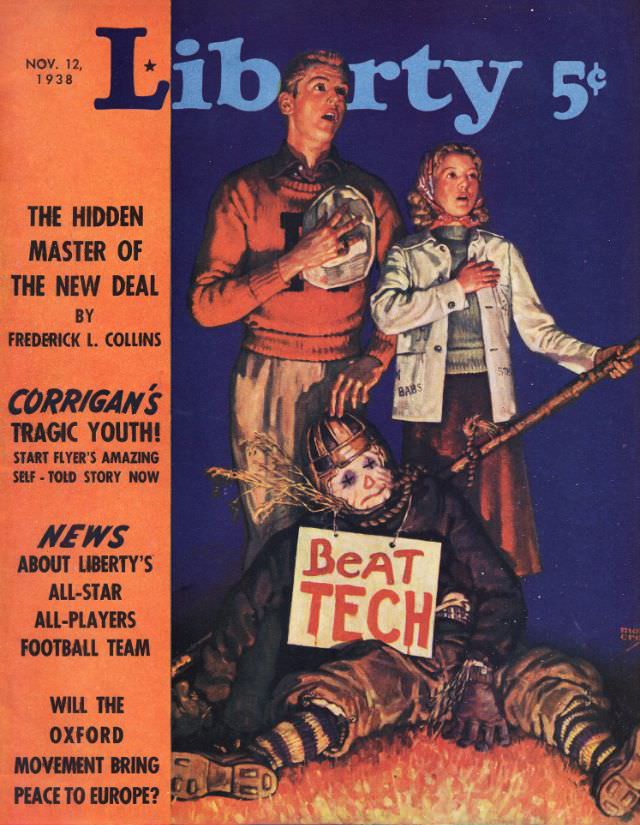
Bold color and theatrical lighting make the Liberty cover dated November 12, 1938 feel like a stage scene frozen mid-chant. Under the magazine’s familiar masthead and 5¢ price, two college-age figures stand with hands to their chests as if caught in a pledge, rally, or game-day anthem, while their eyes track something unseen beyond the frame. The pose is patriotic, but the mood is slightly uneasy—an effect heightened by the deep blue background and the tight focus on faces and gestures.
At their feet lies a rival mascot figure in battered costume, straw “hair” spilling out and a placard that reads “Beat TECH,” turning school spirit into visual drama. The toppled character’s stitched features and slumped posture suggest the cartoonish brutality of a football weekend, where boastful slogans and mock villains were part of the spectacle. Small details—sweater lettering, the patterned skirt, the prop pole—anchor the illustration in interwar American youth culture without needing to name a specific campus.
Along the left margin, Liberty’s cover lines advertise a mix of politics, sports, and international anxiety: “The Hidden Master of the New Deal,” “Corrigan’s Tragic Youth!,” and a question about whether the Oxford Movement could bring peace to Europe. That editorial blend is the real time capsule, reflecting how a popular weekly sold both escapism and urgency in the late 1930s. For collectors and researchers of vintage magazine cover art, this issue offers a vivid snapshot of what readers were invited to worry about, cheer for, and argue over—all on the same newsstand.