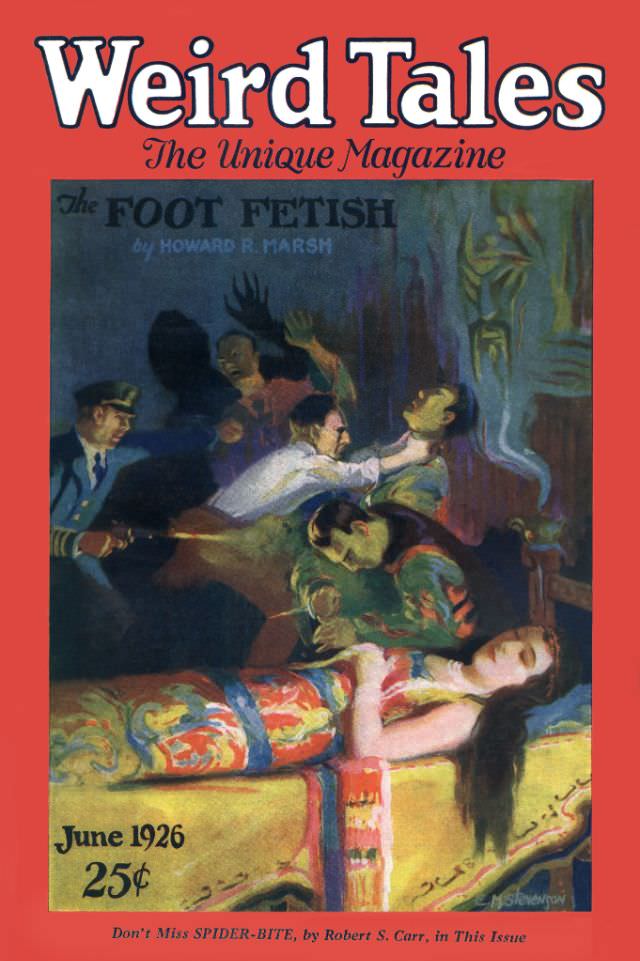
Bold red lettering announces “Weird Tales — The Unique Magazine,” setting the stage for a lurid June 1926 pulp cover that leans hard into suspense and the supernatural. The artwork plunges the viewer into a dim interior where a woman lies draped across a bed or low couch, her patterned garment catching the light while her dark hair spills over the edge. Behind her, a struggle unfolds in shadowy blues and greens, with a man seized by the throat as another figure lunges in, their gestures frozen at the peak of panic.
Pulp-era drama thrives on contrast, and this cover uses it well: theatrical lighting, exaggerated poses, and a claustrophobic composition that pushes faces and hands into the foreground. A looming silhouette on the wall and a ghostly vertical form at the right margin amplify the unease, suggesting something not entirely human just offstage. Even the typography participates in the tension, with story blurbs layered over the chaos—readable enough to entice, half-submerged enough to feel like part of the nightmare.
Collectors and horror-history fans will recognize why Weird Tales cover art remains so searchable and enduring: it’s both a time capsule of 1920s popular imagination and a masterclass in pulp marketing. The price mark “25¢” and the prominent “June 1926” anchor it in the magazine rack era, when a single illustration had to sell thrills at a glance. For anyone exploring classic weird fiction, fantasy illustration, and early horror magazine design, this cover offers an irresistible gateway into the dark, melodramatic world that Weird Tales promised each month.