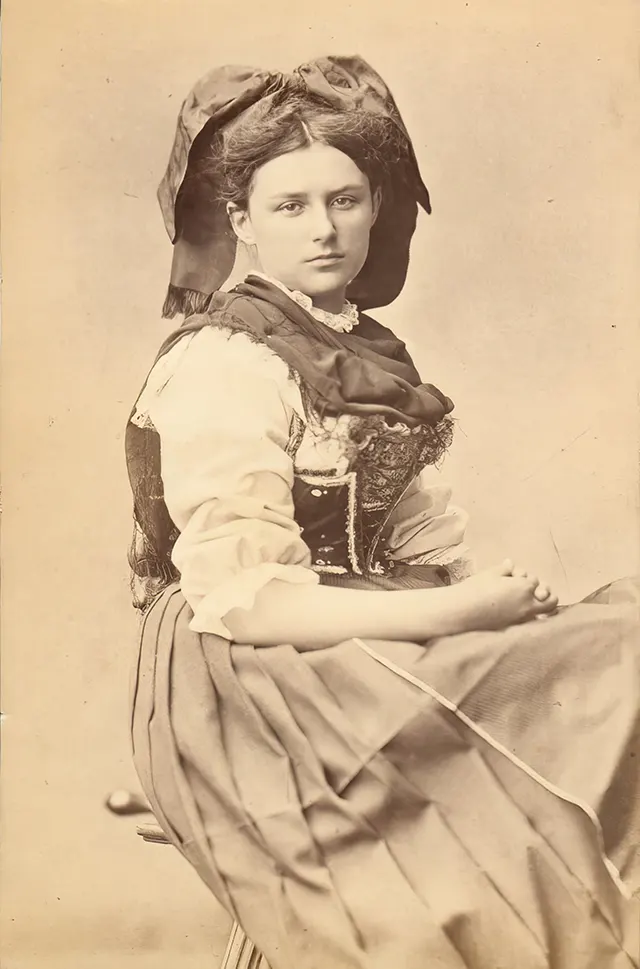
Quiet confidence radiates from the seated young woman, posed in a studio setting with a plain backdrop that keeps every detail of her dress in focus. A large, dark Schlupfkapp frames her head like a soft halo, its fabric folded and draped to emphasize volume and silhouette. Her gaze is steady and direct, inviting the viewer to read the clothing as more than decoration—an emblem of belonging.
Traditional Alsatian costume elements appear in careful layers: a light blouse with gathered sleeves, a fitted bodice with ornate trim, and a full skirt structured by crisp pleats. The contrast between the pale textiles and the deeper tones of the headdress and shawl highlights the craftsmanship of regional fashion, where texture and tailoring signaled community, occasion, and identity. Even in a controlled portrait environment, the outfit carries the feel of lived tradition rather than theatrical disguise.
As a cultural symbol, the Schlupfkapp evokes Alsace’s distinct heritage at the crossroads of European influences, where dress became a visible language of continuity across generations. This photograph’s restrained composition—no props, no scenery—places the emphasis squarely on the wearer and the garments, making it ideal for readers exploring Alsatian identity, folk dress, and the history of fashion and culture. The result is an intimate record of how regional attire could express pride, memory, and place without a single written word.