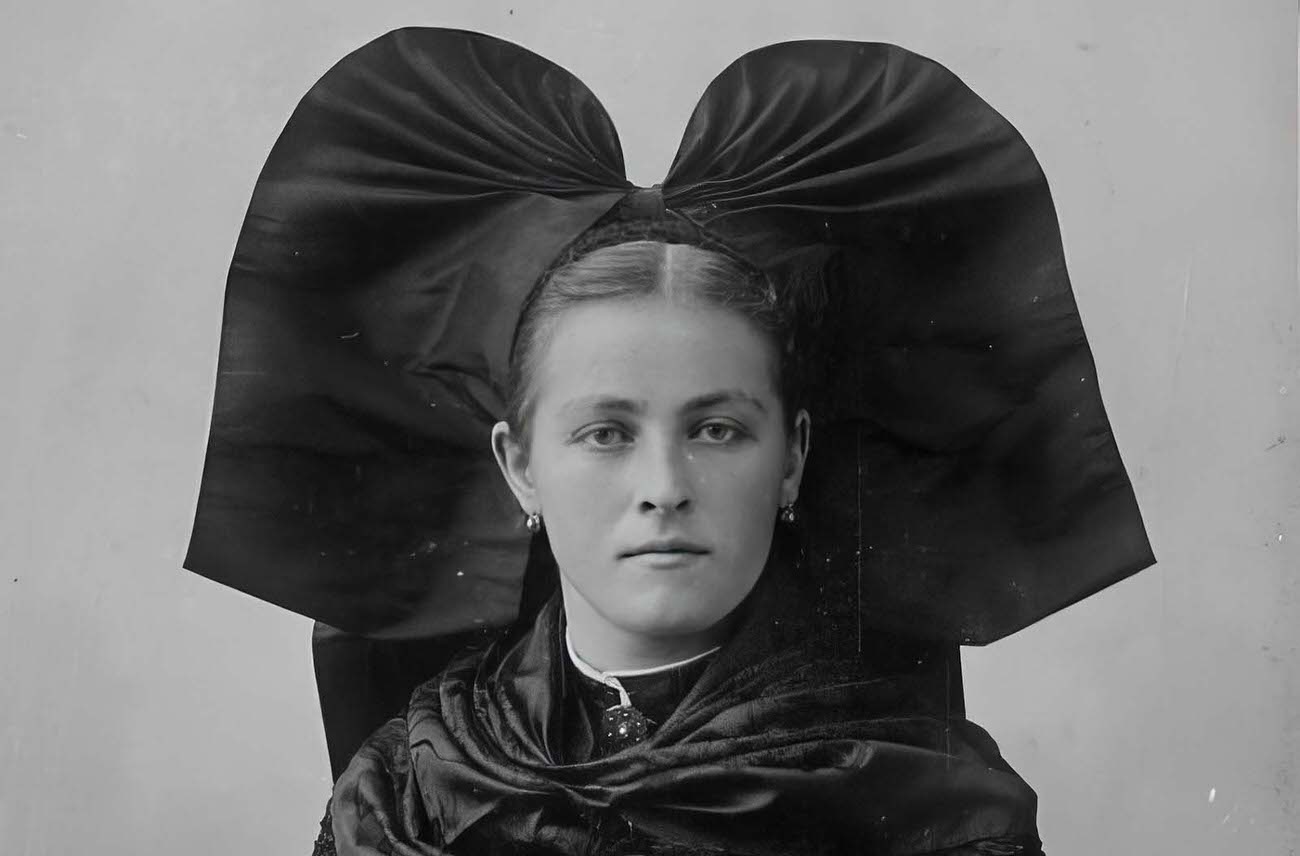
Dominating the frame is the Schlupfkapp, its oversized bow spreading like dark wings behind the sitter’s head and turning a simple portrait into a statement of Alsatian folk dress. The fabric catches the light in soft ripples, revealing careful gathering at the knot and the deliberate symmetry that made this headdress so instantly recognizable. Against a plain studio backdrop, the silhouette reads with striking clarity, highlighting how regional fashion could function as visual identity.
Her expression is calm and direct, with a center-parted hairstyle tucked neatly beneath the cap, small earrings glinting at the ears, and a high-collared garment finished with a brooch at the throat. A heavy shawl drapes around her shoulders, its sheen suggesting fine material chosen for appearance as much as warmth. The photographer’s tight composition keeps attention on textiles and posture, underscoring the pride embedded in traditional costume.
More than an accessory, the Schlupfkapp became a cultural emblem—an instantly legible sign of belonging in a borderland shaped by shifting influences and loyalties. Seen through the lens of fashion history, the dramatic bow speaks to community, ritual, and the ways women’s dress carried meaning beyond the everyday. For readers searching Alsatian identity, traditional headdress, and European regional heritage, this portrait offers a vivid reminder of how clothing can preserve memory across generations.