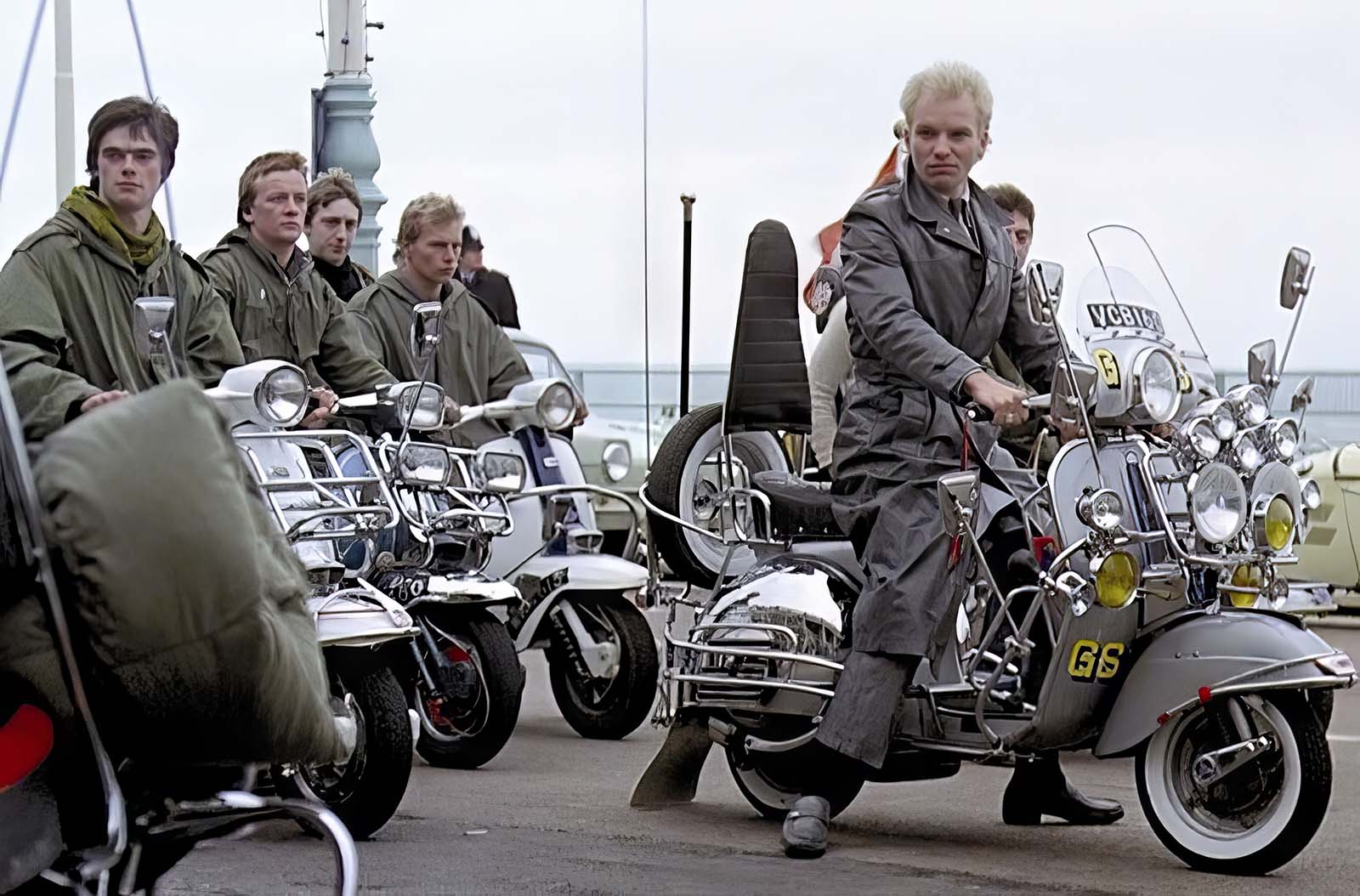
Scooters sit nose-to-tail along a seaside promenade, their chrome racks and clusters of mirrors catching the flat coastal light. A young rider in a belted raincoat grips the handlebars of a heavily accessorized machine, while behind him others wait in parkas and scarves, faces set with the cool watchfulness of a crew out on display. The horizon and railings hint at a waterfront gathering, where style is as public as the street itself.
Fashion is doing the talking here: practical outerwear layered over sharp silhouettes, tidy haircuts, and the unmistakable pride of personalization—badges, lights, windscreens, and polished trim turned into rolling identity. The scooters read as urban modernity made portable, a look associated with Mod taste for sleek lines, Italian-inspired design, and curated detail. Even the stance of the group suggests a ritual of arrival, as if the ride is only half the point and being seen is the rest.
Across the 1960s “style wars,” youth culture often split into competing uniforms, and the tension between clean-cut modernism and tougher, road-worn attitudes became headline material. This scene captures that social theater without needing a stage: machines lined up like costumes, riders posed like a band, and the seafront acting as a natural runway. For anyone searching the era’s Mods and Rockers fashion story, the image offers a crisp reminder that clothing, vehicles, and belonging were stitched together in the same frame.