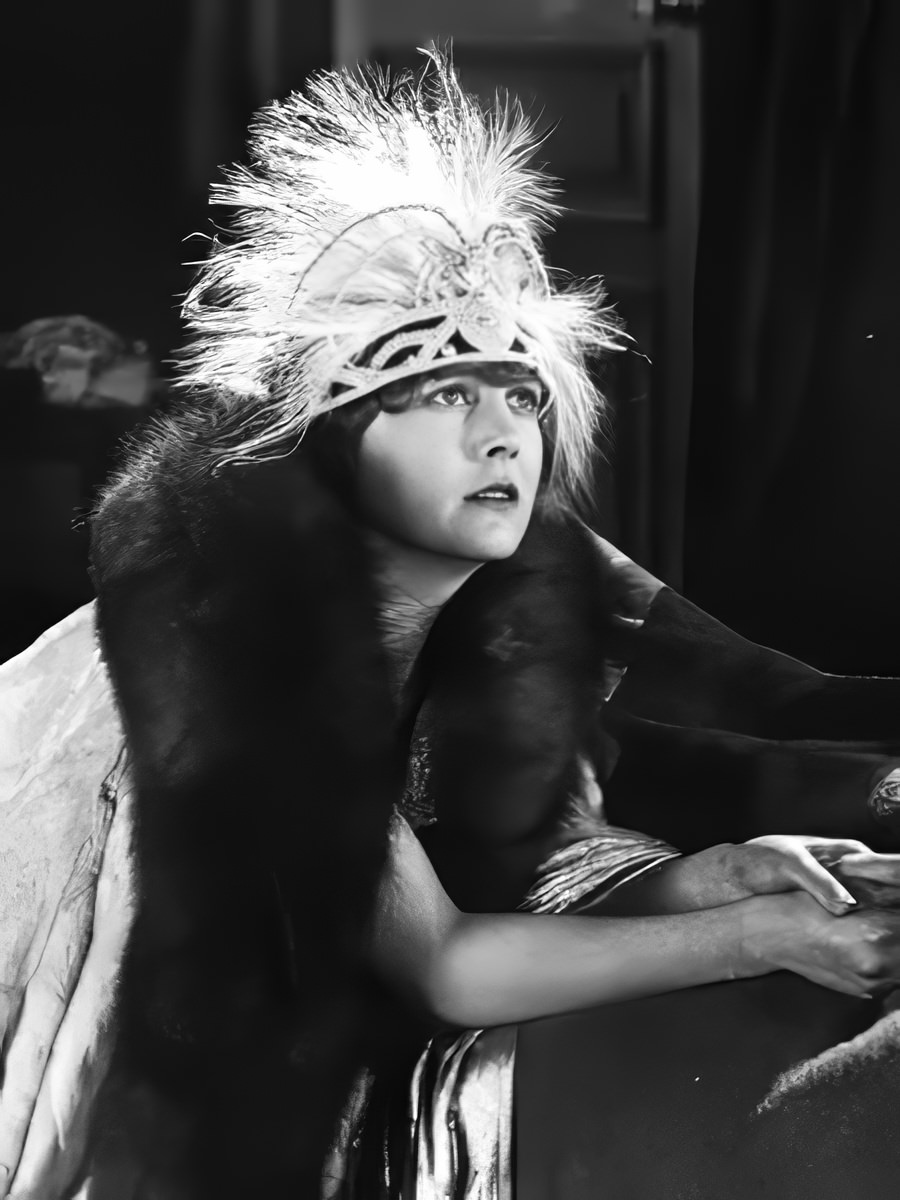
Poised in three-quarter profile, Edna Purviance gazes upward with the soft intensity that made her a natural presence in silent cinema. A dramatic feathered headpiece crowns her dark bob, its airy plumes catching the studio light, while a patterned band frames her forehead like a piece of Art Deco jewelry. Draped in a luxurious fur stole and satiny fabric, she rests her arms on a ledge, creating a sculptural pose that reads as both elegant and quietly defiant.
Known best as Charlie Chaplin’s leading lady, Purviance helped shape the screen ideal of the era’s modern woman—romantic, self-possessed, and emotionally legible even without dialogue. The portrait leans into that star persona, blending glamour with a hint of rebellion through its bold accessories and confident styling. In the language of early Hollywood publicity, every element here—light, texture, and silhouette—works to turn an actress into an icon.
Behind her, the background falls into shadow, keeping attention on the expressive face and the tactile contrast of feathers, fur, and sheen. The result feels like a meeting point between 1920s fashion and film culture, where flapper-era aesthetics were refined for the camera and amplified into mass appeal. For readers searching classic Hollywood photography, silent film stars, or 1920s style inspiration, this image offers a vivid example of how glamour was carefully staged—and how it still resonates today.