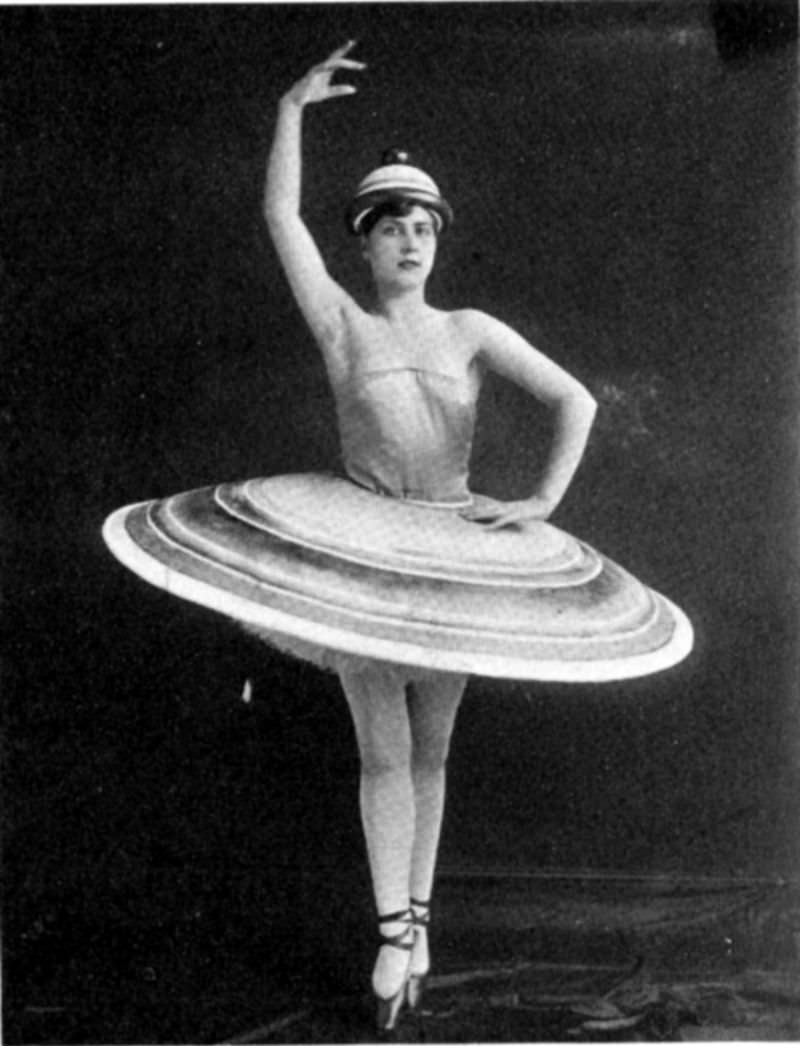
A lone dancer stands against a dark stage backdrop, one arm lifted in a crisp, sculptural gesture while the other anchors at the waist. The costume turns the human body into a playful machine of forms: a wide, concentric disc skirt that reads like a spinning top or layered ring, paired with a small cap that echoes the same geometric logic. Even in monochrome, the silhouette feels loud—part ballet, part modern design experiment—commanding attention through shape rather than ornament.
In the spirit of “The Triadic Ballet,” this kind of stagewear blurs fashion and performance until they’re inseparable. The rigid, architectural skirt limits and dictates movement, making each pose look engineered, as if choreography were drafted with a compass and ruler. That tension—graceful limbs emerging from a constructed volume—captures the Roaring Twenties fascination with modernity, abstraction, and the thrill of turning everyday materials and forms into avant-garde spectacle.
Seen today, the photograph reads like an early statement of wearable art and surreal fashion culture, long before those terms became common. The stark contrast, the minimalist set, and the boldly geometric costume all emphasize the era’s appetite for experimentation, where dance could become a living gallery of circles, lines, and controlled motion. For anyone searching Art Deco performance, avant-garde costume design, or 1920s cultural history, this image offers a striking entry point into a world where geometry took the lead onstage.