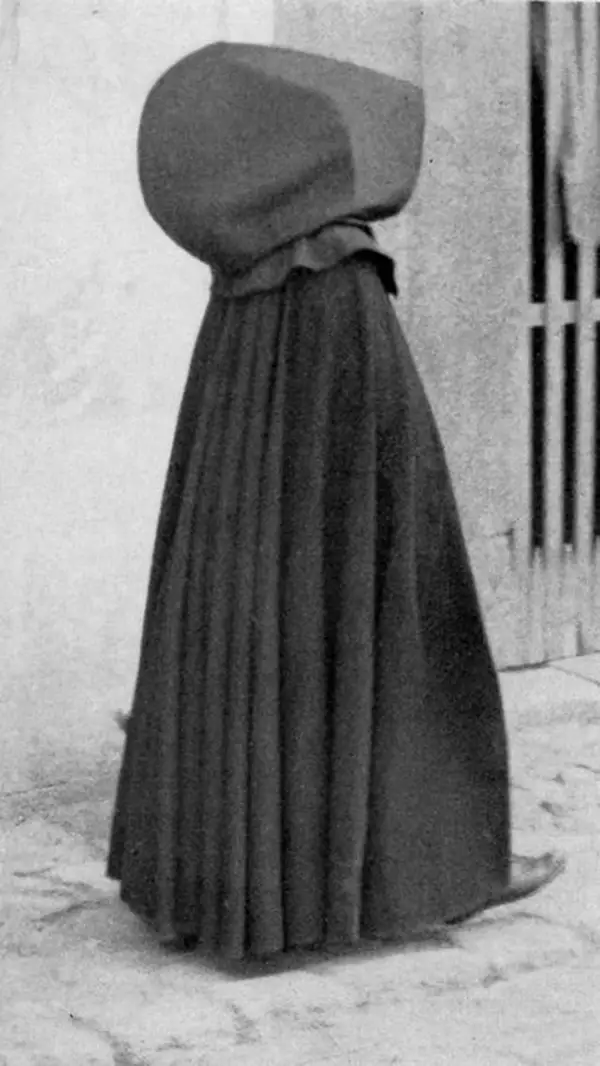
A lone figure moves through a plain street scene, almost entirely enveloped by an Azorean hooded cape whose dramatic, rounded hood rises like a sculpted silhouette above the shoulders. The heavy fabric falls in long, dark pleats to the ground, turning the wearer into a single flowing shape—part garment, part architecture. With the face concealed and the posture slightly turned, the photo emphasizes mystery and dignity over individual identity.
Known in the Azores as the traditional “capote e capelo,” this distinctive women’s attire blended practicality with unmistakable style, offering shelter from wind and drizzle while also signaling local fashion and custom. The oversized hood and full-length cloak create a private interior space, suggesting how dress could provide both protection and a measure of anonymity in everyday public life. Even without ornate detail, the careful cut and volume reveal a sophisticated textile tradition rooted in island culture.
Set against a simple wall and window bars, the composition draws attention to texture, weight, and movement rather than scenery, making it a striking document of Portuguese heritage clothing. For anyone exploring historical fashion, Azorean culture, or the evolution of European folk dress, the image stands out as a powerful example of how regional garments shaped daily experience. It is a quiet yet memorable portrait of tradition—where the cape itself becomes the subject, carrying history in its folds.