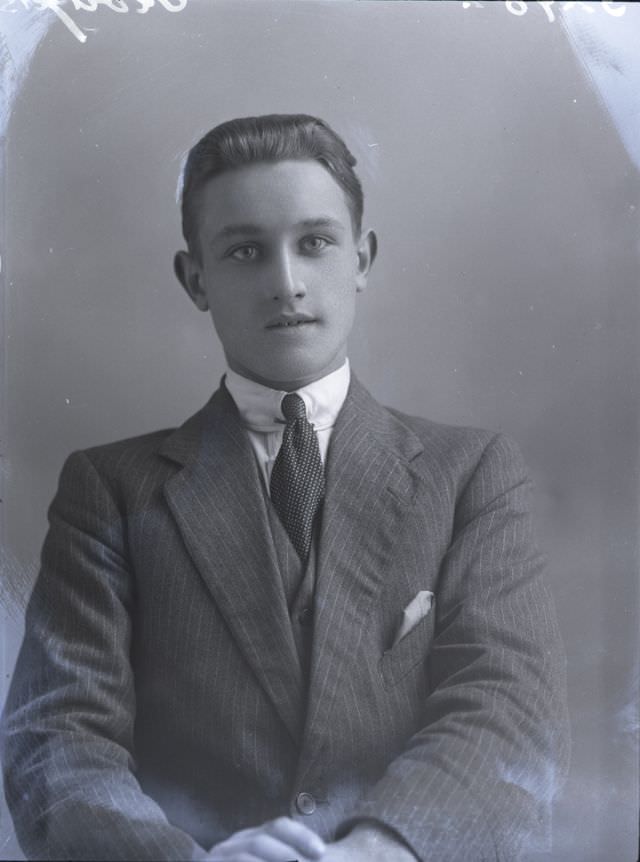
A teenage boy meets the camera with an easy, self-possessed gaze, his hair neatly parted and brushed back in the sleek Edwardian style. The studio backdrop is plain and softly lit, keeping attention on the sitter’s face and the careful presentation of youth poised on the edge of adulthood. Even without scenery or props, the portrait reads as a statement of modernity and ambition from the early 20th century.
Tailoring does most of the talking: a pinstriped suit jacket with broad lapels sits cleanly over a high, stiff collar, paired with a dark tie that draws the eye down the center line. A crisp pocket square adds a final note of refinement, suggesting that teenage fashion of the era often mirrored men’s formal wear rather than separating “youth” into its own category. The overall effect is dapper and disciplined, the kind of look associated with respectability, school, work, or a special occasion worthy of a professional photograph.
What lingers is the tension between softness and structure—young features framed by adult clothing designed to signal seriousness and good breeding. Portraits like this help historians trace how Edwardian-era fashion and culture trained boys in the visual language of class, confidence, and propriety. As a snapshot of teenage style, it also highlights the enduring appeal of sharp suits, clean lines, and the quiet power of dressing well.