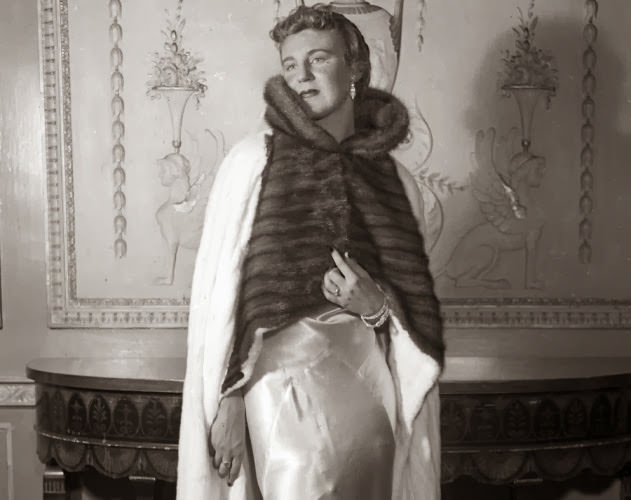
Glamour and practicality meet in this 1935 scene from a fur fashion show at New York’s Waldorf-Astoria Hotel, where luxury garments were displayed as confidently as evening gowns. The model is wrapped in a white Russian ermine cape trimmed with a deep sable collar, the contrasting textures turning her shoulders into a kind of stage. Behind her, the formal interior décor reinforces the message such events sold: fur wasn’t merely outerwear, it was spectacle.
Even the pose reads like a lesson in 1930s style—poised, slightly aloof, and carefully arranged so the collar frames the face and the cape falls in a clean, dramatic line. A satin dress catches the light beneath the fur, offering that glossy sheen so associated with interwar evening fashion and its love of sleek surfaces. The overall look suggests an era when department stores, hotels, and fashion houses treated runway presentations as society entertainment as much as retail persuasion.
Seen today, the image also carries the weight of changing values, since fur has shifted from everyday aspiration to frequent controversy. That tension makes the photograph especially compelling for readers interested in fashion history, 1930s culture, and the evolving meanings of luxury. As a snapshot of the period’s ideal of elegance—polished, theatrical, and unapologetically opulent—it helps explain why fur once held such a central place in the public imagination.