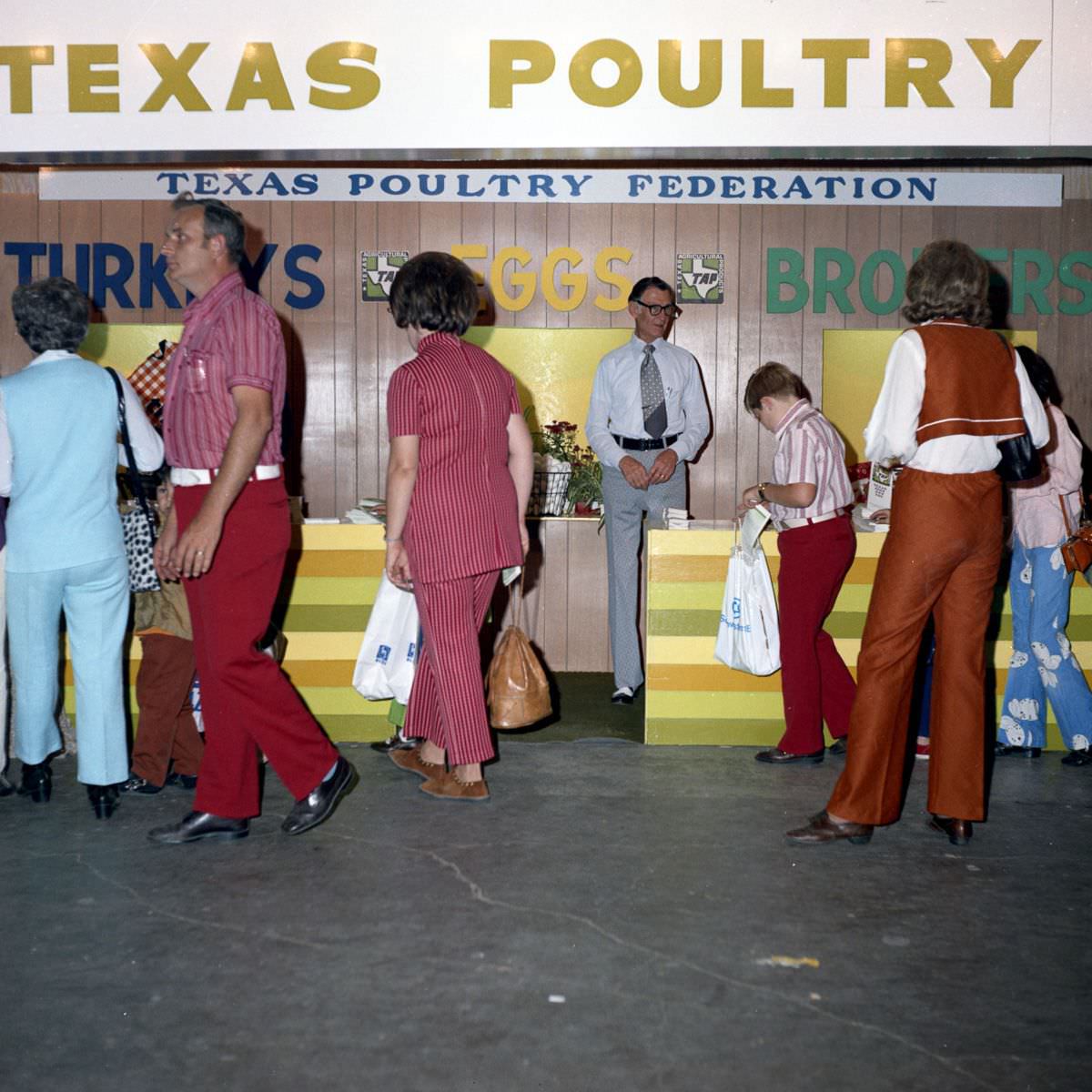
Bold block lettering reading “TEXAS POULTRY” and “TEXAS POULTRY FEDERATION” sets the scene inside a bustling state-fair exhibition hall, where counters and display tables promise “TURKEYS,” “EGGS,” and “BROILERS.” Fairgoers drift past in mid-stride, some pausing with shopping bags in hand, while a neatly dressed attendant stands behind the booth like a calm anchor amid the traffic. The snapshot’s candid movement and indoor lighting evoke the sensory mix of a Texas State Fair—commerce, livestock promotion, and community spectacle sharing the same crowded floor.
Bell-bottom trousers, striped knit sets, wide belts, and suede-like shoes speak to early-1970s fashion with an unselfconscious practicality, more streetwear than stagewear. Earth tones and saturated reds stand out against the booth’s yellow-and-green signage, and the silhouettes—flared legs, fitted tops, and layered vests—capture how everyday style mirrored the era’s larger cultural shifts. Even without a crown in frame, the clothing and posture of the crowd echo the period’s pageant atmosphere, when public events routinely blended local industry pride with curated looks and public presentation.
Pageantry at the fair—such as the crowning of “Miss Pecan Nuts” referenced in the title—belonged to the same ecosystem as these promotional stalls, linking agriculture, sponsorship, and entertainment into a single Texas tradition. The image underscores how beauty contests functioned as marketing as much as ceremony, surrounded by booths representing food, farming, and trade groups eager for visibility. Read today, it becomes a textured record of 1972 fair culture: a place where fashion, consumer habits, and regional identity met under one roof, bright signage overhead and concrete floors below.