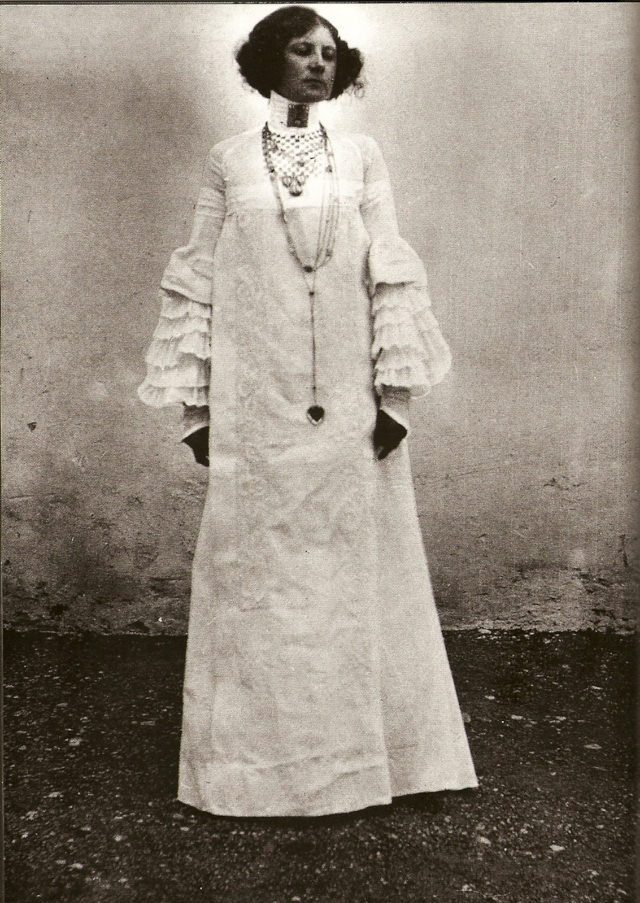
Emilie Flöge’s fashion career comes into focus through rare photographs that feel both intimate and radical, revealing how boldly she pushed against the constraints of conventional dress. In the featured image, a lone figure stands before a plain wall, letting the clothing speak: a long, flowing garment in a pale tone, cut with a relaxed silhouette that refuses the rigid shaping associated with mainstream elegance. The look is elevated by layered necklaces and a strong choker-like collar, details that turn simplicity into statement.
Fashion historians often point to how reform-minded design embraced comfort, movement, and a modern sense of identity, and this portrait quietly echoes that shift. Voluminous sleeves with soft, tiered cuffs add rhythm and drama, while the straight fall of the fabric creates an almost architectural line from shoulder to hem. Even without a busy backdrop, the ensemble communicates confidence—an early kind of fashion editorial mood where posture, texture, and accessories build the narrative.
Readers drawn to early modern style, women’s fashion history, and the cultural currents that shaped new ways of dressing will find this post a rich visual starting point. These rare photos invite a closer look at how Flöge’s work bridged fashion and culture, balancing artistry with everyday wearability. From the garment’s liberated cut to the carefully chosen jewelry, the story here is not just about what was worn, but about what clothing could mean in a changing world.