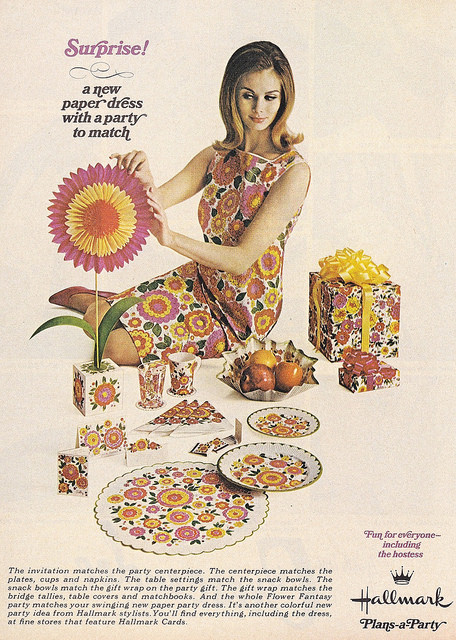
Bright, pop-floral patterns spill across the scene like a burst of confetti, from the sleeveless paper dress to the plates, napkins, and even the wrapped gifts arranged at floor level. The ad copy leans into the novelty—“a new paper dress with a party to match”—turning what could have been a disposable garment into the centerpiece of an entire look. With a stylized flower decoration in hand and coordinated partyware fanned out around her, the model embodies the era’s cheerful faith in modern materials and instant, coordinated style.
Paper dresses in the 1960s were equal parts fashion experiment and cultural shorthand: inexpensive, graphic, and made for the thrill of the moment. They fit perfectly with a decade that celebrated youth culture, bold prints, and the idea that style could be as quick and changeable as the music on the radio. In this composition, the dress isn’t presented as heirloom clothing; it’s packaged as an experience—buy the outfit, set the table, stage the party, and step into a ready-made scene.
What makes this image linger is how clearly it reveals mid-century consumer optimism and the rise of themed entertaining, where branding and lifestyle blurred into one another. The coordinated paper goods and gift wrap echo the dress’s pattern, hinting at a world where fashion, home décor, and celebration could all be synchronized at the checkout counter. For readers exploring 1960s fashion history, paper dress culture, and the aesthetics of mod-era advertising, the photograph offers a vivid snapshot of a trend that burned bright—then vanished almost as quickly as the paper it was printed on.