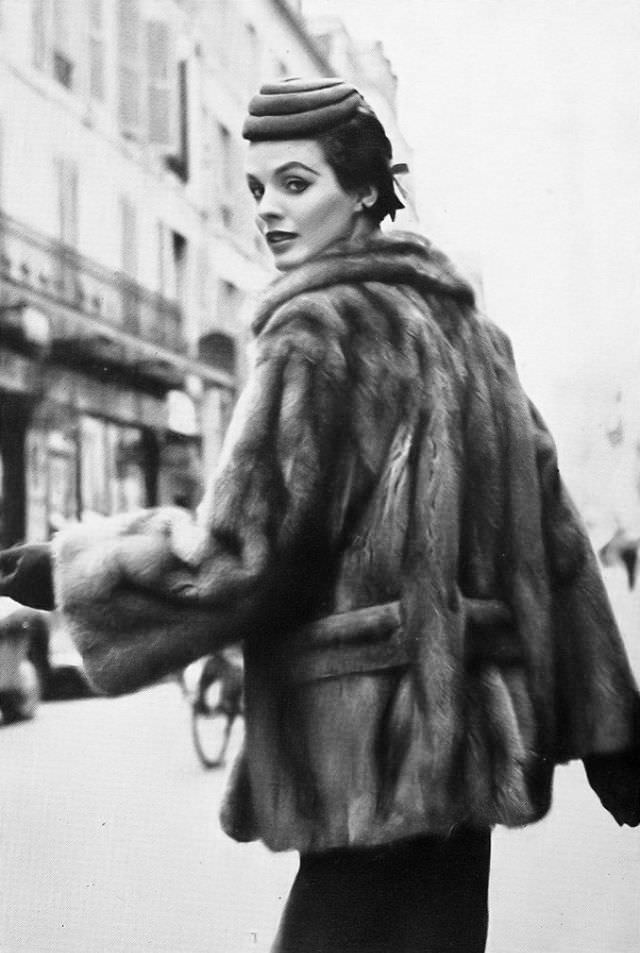
Turning back over her shoulder as she moves along a Paris street, Linda Harper fixes the viewer with a poised, knowing glance—an instant of motion made glamorous. The city behind her dissolves into soft blur, letting the silhouette dominate: a sculpted hat, sharp eyeliner, and the plush sweep of a wild mink jacket that catches the light in rippling bands of fur.
Christian Dior’s design details read clearly even in the grain of the photograph, especially the low slotted belt that cinches the coat and shapes the figure into the clean, controlled lines prized in early-1950s couture. The jacket’s generous volume contrasts with the narrow waist and sleek skirt, a classic high-fashion balance of opulence and restraint, while Harper’s posture suggests the practiced ease of runway training translated to the street.
Paris, 1953 sits at the heart of postwar style-making, when the city’s couture houses helped define luxury for an international audience and fashion photography increasingly embraced outdoor settings. Here, the everyday rhythm of traffic and pedestrians becomes a stage for Dior elegance, merging lifestyle and high design in a way that still feels modern. As a piece of fashion history, the image sells more than a garment—it sells the promise of sophistication, captured in a single backward glance.