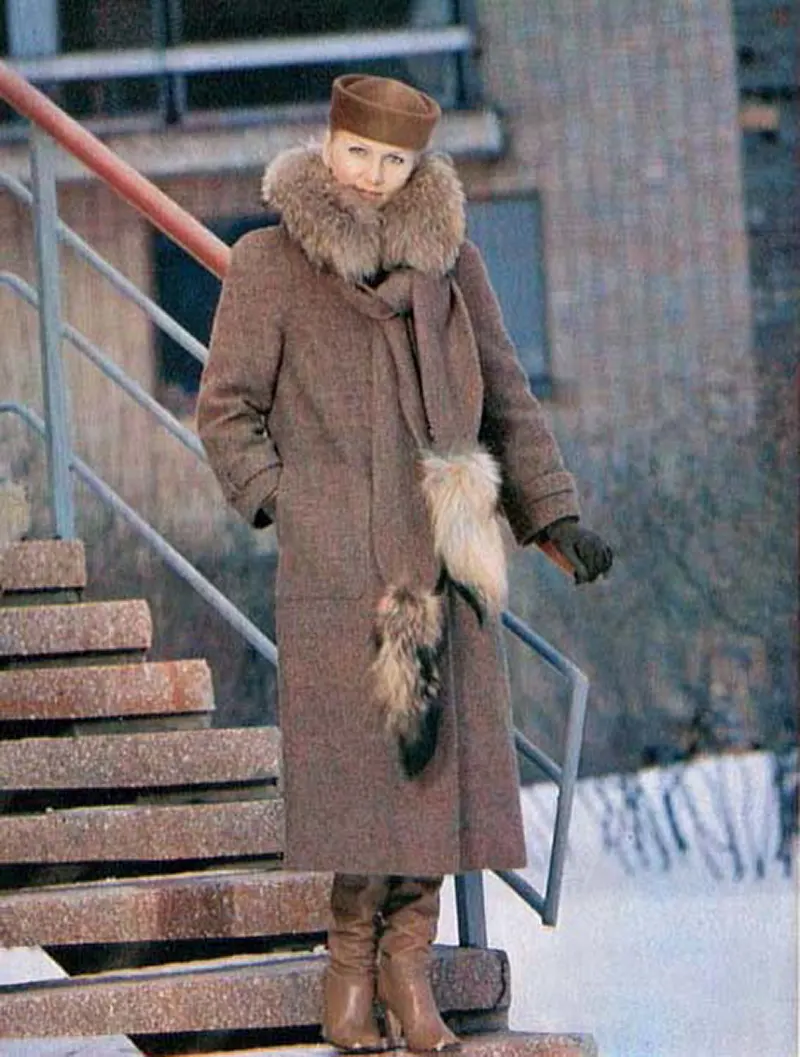
Wrapped in winter light, a young woman stands on an outdoor stairway in a long, tailored coat that speaks to the practical elegance of Soviet Union women’s fashion in the 1960s–70s. The coat’s rich brown wool is softened by a generous fur collar and striking fur accents down the front, while a small pillbox-style hat and dark gloves complete a composed cold-weather look. Behind her, the stark geometry of concrete and metal railings frames the outfit, turning everyday architecture into a simple runway.
Details like the cinched silhouette, clean lines, and coordinated tones reveal how style was built through texture and careful finishing rather than loud display. Her high boots elongate the figure and underscore the era’s taste for polished, city-ready footwear, suggesting a wardrobe meant to endure long seasons while still feeling fashionable. The overall effect balances warmth and refinement—an image of dignity and self-expression shaped within the constraints and creativity of the time.
Seen through the lens of fashion and culture, the photograph hints at a broader story: women carving out individuality with well-cut outerwear, fur trims, and smart accessories that signaled taste as much as necessity. It’s a quiet but vivid snapshot of Soviet street style, where seasonal dressing became a canvas for personal pride. For anyone exploring 1960s-70s Eastern European fashion history, the scene captures the era’s bold restraint—classic, resilient, and unmistakably of its moment.