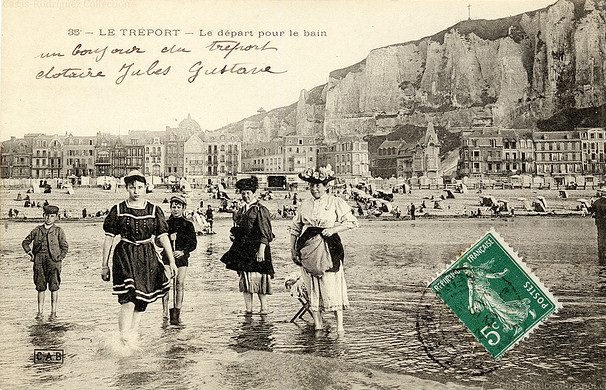
Along the shoreline at Le Tréport, a lively crowd wades into the shallows beneath towering chalk cliffs and a dense row of seaside buildings. The scene feels like a public ritual of leisure: children splashing nearby, adults strolling with measured confidence, and onlookers dotting the sand as if the beach were a promenade. Even the postcard styling—with handwritten notes and a bold green stamp—adds to the sense that seaside bathing had become something to record, send, and remember.
Women’s swimsuits here speak volumes about early 1900s expectations, balancing modesty with the practical demands of the surf. Dark, knee-length bathing dresses with pale trim, long sleeves, and layered fabrics create a silhouette closer to streetwear than modern swimwear, while hats and structured garments hint at the era’s insistence on propriety. At the same time, the very act of entering the water in such clothing marks a cultural shift, when health, recreation, and fashion began to meet at the water’s edge.
As a photographic exploration of how women’s swimwear changed over time, this image helps anchor the story in everyday reality rather than runway myth. It’s a snapshot of fashion and culture in transition—when bathing “costume” was still a costume, and the beach was both a social stage and a new frontier of freedom. Look closely and you can trace the beginnings of a century-long evolution from layered coverage toward comfort, movement, and modern beach style.