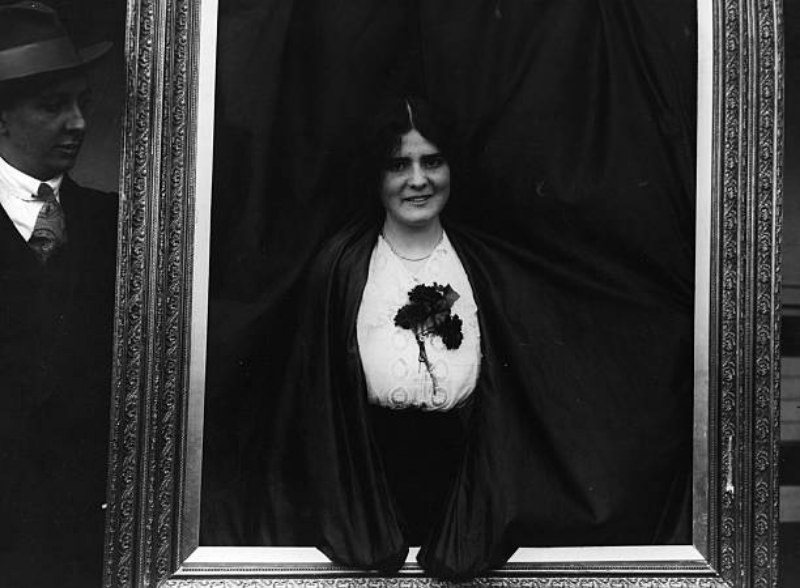
Set within an ornate, gilded-looking picture frame, Miss Myrtle Grove is presented almost like a living portrait, her calm smile directed toward the camera as dark drapery falls behind her. The theatrical framing turns a simple photograph into a staged display, emphasizing the spectacle that surrounded public celebrations of beauty in the early twentieth century. Even without a detailed backdrop, the composition conveys ceremony and careful presentation, hallmarks of Edwardian-era promotional imagery.
Her clothing speaks to the period’s Fashion & Culture: a light blouse with decorative detail at the front, a dark skirt, and a draped wrap that softens her silhouette. A clustered floral corsage pinned at her chest becomes the focal point, suggesting both femininity and the formal honor of being a winner. At the edge of the frame, a man in a hat and tie appears partially cropped, an incidental figure that hints at the crowd and organizers just beyond the staged scene.
Linked in the title to the International Beauty Show at Folkestone, the photograph offers a window into how such events blended entertainment, social aspiration, and modern publicity. The use of a large frame and curtain-like backdrop turns the winner into an exhibit, inviting onlookers to admire her as they would a painting. For readers searching Edwardian Folkestone, early beauty contests, or the International Beauty Show of 1913, this image distills the era’s mix of glamour, performance, and public fascination with idealized feminine presentation.