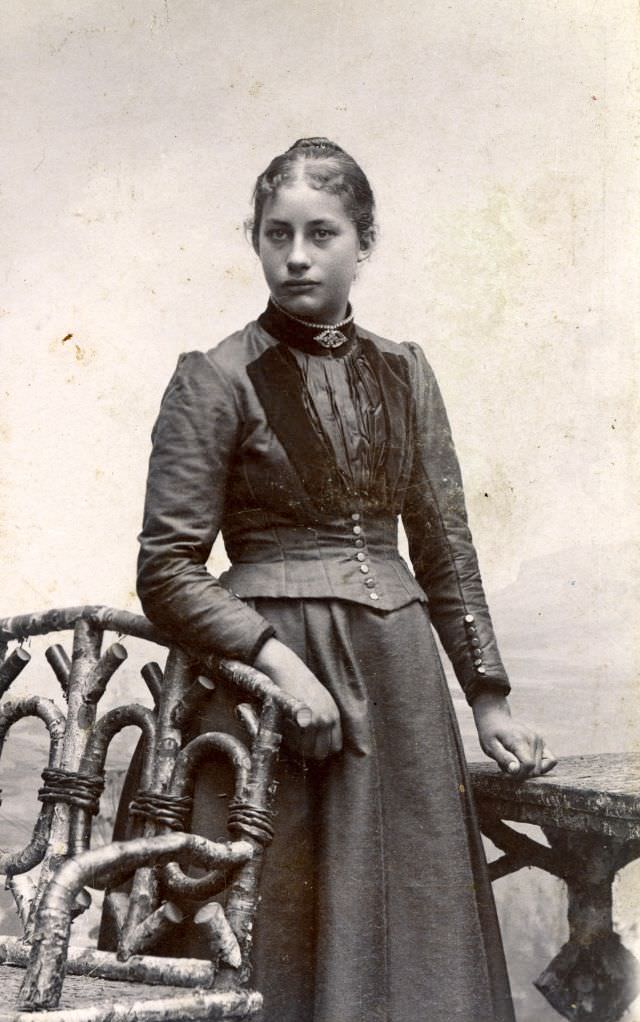
Poised beside a rustic wicker chair, a young woman faces the camera with a steady, unsmiling calm that feels unmistakably late Victorian. Her hair is neatly pinned back, and the high collar and brooch at her throat frame a composed, self-possessed expression. The plain studio backdrop keeps attention on her figure and clothing, turning an everyday portrait into a document of fashion and social expectation.
Her outfit makes the era’s silhouette clear: a fitted bodice cinched tightly at the waist, a row of buttons drawing the eye downward, and a long skirt falling in a smooth, heavy line. Even without the underlayers visible, the corset’s shaping influence is evident in the tapered midsection and upright posture it encourages. Details like the structured sleeves and dark trim suggest careful tailoring, the kind of finish associated with respectable late 19th-century women’s dress.
Corsets were more than an “indispensable undergarment” in Victorian culture; they were technology, etiquette, and idealized beauty all stitched into one. Portraits like this helped normalize the fashionable hourglass form and the disciplined stance that came with it, while also hinting at the physical restraint involved. As a piece of fashion history, the image offers a close look at how Victorian women’s clothing balanced decoration with control—an enduring subject for anyone researching 19th-century style, corsetry, and cultural identity.