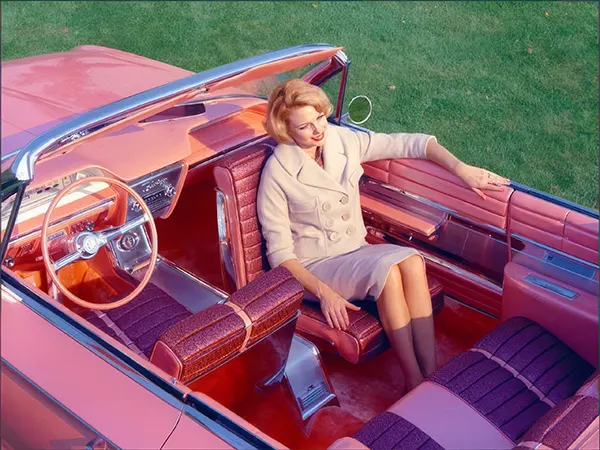
Sunlit and candy-colored, the 1961 Buick “Flamingo” reads like a mid-century daydream, its pink bodywork framing an interior drenched in warm reds and gleaming chrome. From above, the cockpit looks more like a lounge than a car: a thin-rimmed steering wheel, polished trim, and broad upholstered surfaces designed to impress as much as to drive. Even the green lawn beyond the doorline feels staged to make the pastel palette pop, the kind of carefully composed scene that sells modern life as effortless glamour.
Reclining with an easy confidence, a woman in a tailored light coat and skirt leans back as if she has just discovered a new kind of comfort. The title’s promise—“heaven” via a rotating front seat—fits the posture perfectly, turning a mechanical feature into a small luxury ritual, a graceful pivot meant to spare knees, skirts, and dignity. Her relaxed expression and the way her arm drapes across the door suggest the era’s fascination with convenience, when automotive innovation was marketed as personal pampering.
Beneath the fashion-and-culture sheen lies a story about design optimism, when concept cars and special features hinted at a near future of smoother, smarter mobility. The “Flamingo” name alone evokes spectacle, and the coordinated colors read like a runway translation of car styling: bold, feminine-coded, and unabashedly theatrical. For anyone searching classic Buick interiors, rotating car seats, or 1960s automotive design, this photograph distills how technology and style were intertwined—selling not just transportation, but a feeling.