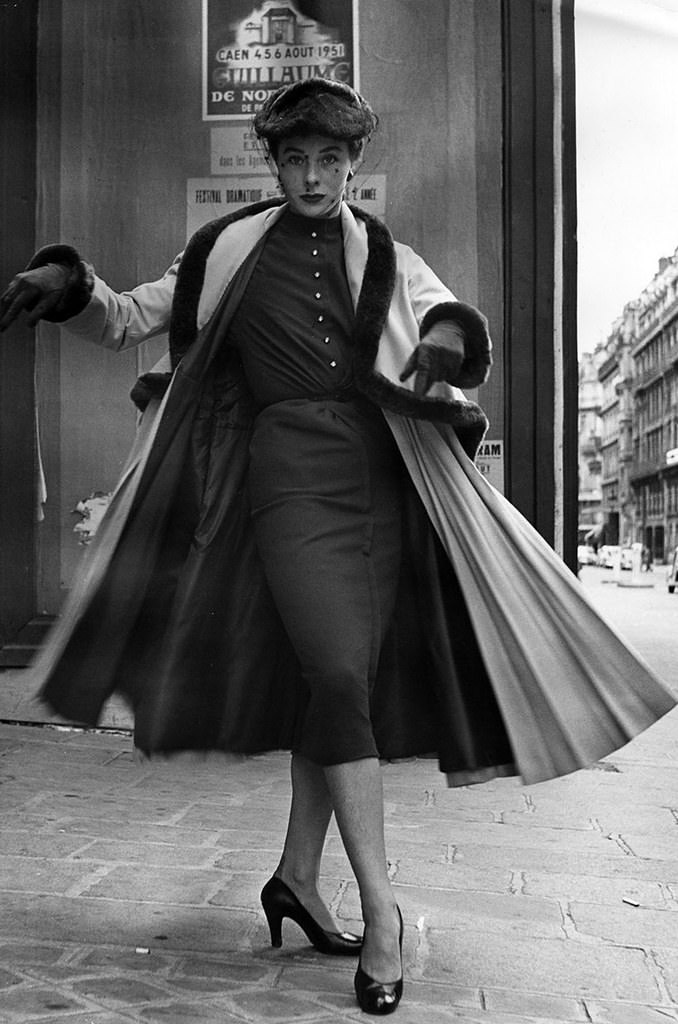
Bettina Graziani steps into the frame with the theatrical poise that made her a symbol of French haute couture, her gaze steady as her coat flares outward in motion. The Jacques Fath “bell-line” design reads instantly in the sweep of fabric—structured yet buoyant—opening like a stage curtain to reveal a sleek, buttoned dress beneath. Gloves, a sculpted hat, and sharply polished heels complete the silhouette, turning a simple stride into a choreographed moment of mid-century elegance.
Behind her, a city street and a wall of posters ground the glamour in everyday urban life, where fashion meets pavement rather than pedestal. The composition emphasizes movement: the coat’s hem arcs wide, the skirt narrows toward the knee, and her crossed step creates a rhythm that draws the eye upward. Even in monochrome, the contrasts of light lining and dark trim highlight the craftsmanship that defined couture in the postwar era.
More than a model snapshot, the photograph feels like a document of style culture—how designers such as Jacques Fath used bold shape to project confidence and modernity, and how Bettina embodied that message with expressive, editorial presence. The “bell-line” effect nods to a period fascinated by new proportions, balancing drama with restraint through clean tailoring and careful detailing. For fashion history enthusiasts, it’s a vivid reminder of how French supermodels and Paris couture together set the visual language of 1950s chic.