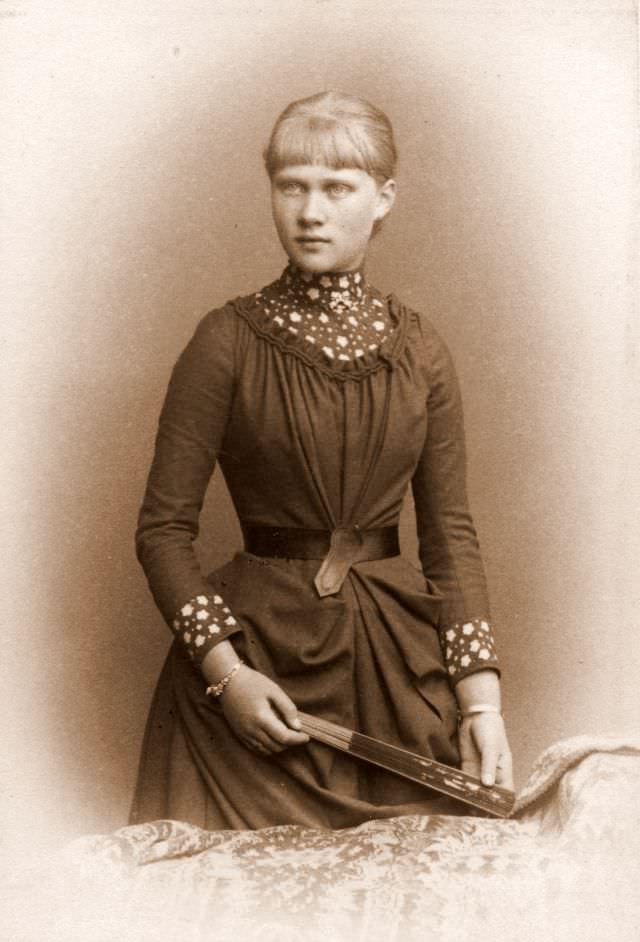
A young Victorian woman stands in a studio setting, her posture poised and her gaze turned slightly to one side, as if caught between formality and a private thought. The dress is carefully structured at the waist, with a high neckline and patterned fabric at the collar and cuffs that draws attention upward to the face. In her hands she holds a closed fan, a small accessory that signals refinement while also giving her a composed, deliberate stance.
The silhouette tells the larger story hinted at by the title: the late 19th-century corset as an “indispensable” foundation garment shaping fashionable clothing from the inside out. Even without the undergarment visible, its influence is written into the smooth lines of the bodice and the cinched waist that Victorian society associated with elegance and respectability. Such portraits served as both personal mementos and quiet advertisements for the era’s ideals of femininity, taste, and social standing.
Details like the plain backdrop, the soft sepia tones, and the careful lighting place the emphasis on texture—gathered fabric, crisp trim, and the disciplined tailoring that defined Victorian women’s fashion. For modern viewers searching for authentic Victorian corset history, late 19th-century dress styles, or everyday fashion culture, the image offers a vivid reminder that beauty standards were often engineered through layers of clothing. It’s an intimate glimpse of how an unseen garment could dictate not only the shape of a dress, but the way a sitter presented herself to the world.