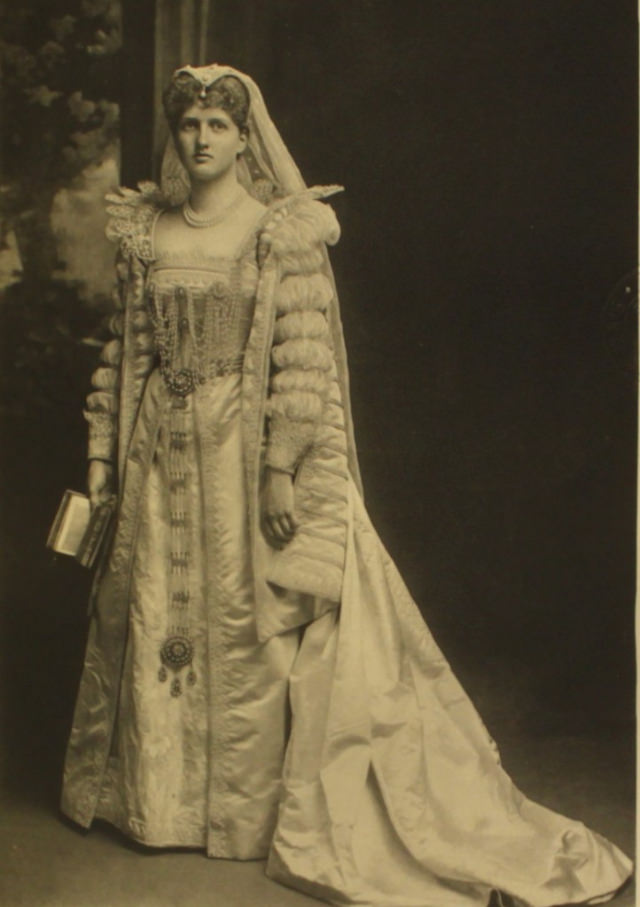
Lady Katharine Scott stands posed as Mary, Queen of Scots, her expression composed and distant, as though lifted from a devotional canvas. A jeweled headpiece and long veil frame her face, softening the stern profile and lending the costume the air of sainthood suggested by the title. Against a plain studio backdrop, the figure reads almost like an icon—still, formal, and meant to be contemplated.
The gown is a triumph of late-Victorian costume spectacle: a structured bodice, ornate vertical trimming, and a long, gleaming skirt that spills into an extravagant train. Puffed, fur-like sleeves add theatrical volume, while a necklace and carefully placed ornaments catch the light in the monochrome print, emphasizing texture over color. In one hand she holds a small book, a prop that underscores piety and learning, and subtly reinforces the “martyred” association that clung to Mary’s legend.
Such portraits recall the culture of grand society masquerades, where historical pageantry and meticulous dress offered the elite a stage on which to perform the past. The styling leans into the romantic Victorian imagination of Mary Queen of Scots—more symbol than sovereign, more tragedy than politics—rendered in costume with reverent attention to detail. For modern viewers searching for Devonshire House Ball costume photographs, Victorian fancy dress, or Mary Queen of Scots imagery, this scene remains a vivid example of how fashion and historical myth-making intertwined.