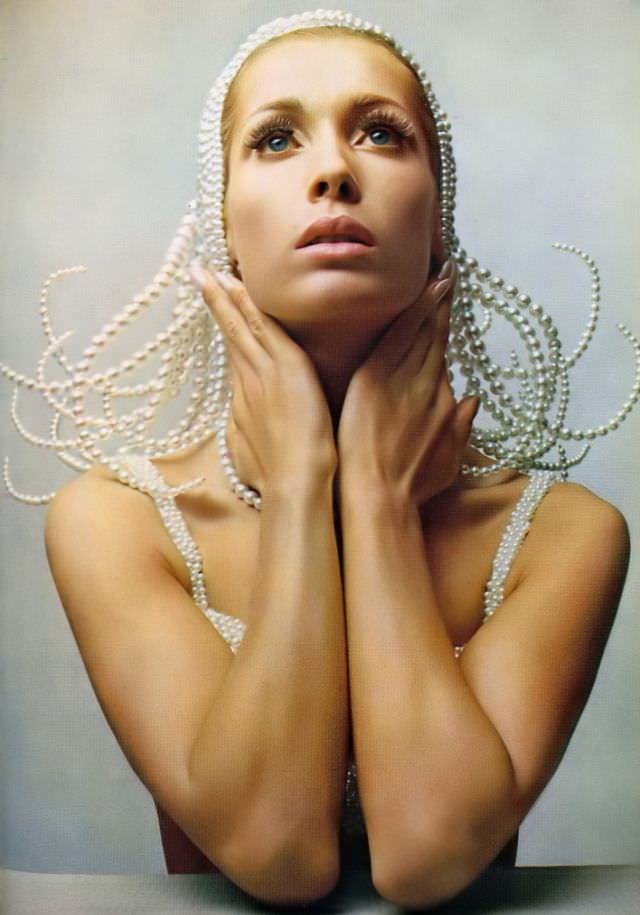
Richelieu pearls spill like sea-foam around Isa Stoppi’s head, transforming jewelry into something closer to costume and sculpture. The strands frame her face in a glistening hood, with looping arcs that float outward and catch the studio light, while her bare shoulders and long neck heighten the sense of clean, modern elegance. Hands pressed at the throat add drama and intimacy, drawing the eye to the lustrous beads and the poised expression that made her a defining presence in 1960s fashion imagery.
Rather than relying on heavy sets or elaborate props, the portrait lets texture do the storytelling: smooth skin against cool, rounded pearls; delicate highlights against a soft, neutral background. The close crop and upward gaze create a devotional mood, as if the model is both wearer and icon, enshrined by the very materials meant to adorn her. It’s a striking example of mid-century editorial style, where minimalism in surroundings amplified maximalism in concept.
Mark Traynor’s pearl design—credited in the title—reads as a statement piece with theatrical movement, capturing the era’s appetite for experimentation and high-impact accessories. In 1966, fashion culture was increasingly willing to blur lines between jewelry, art, and performance, and this image leans into that shift with confident clarity. For anyone searching classic 1960s fashion photography, Isa Stoppi’s pearl-draped portrait remains a memorable study in glamour, innovation, and the power of a single, impeccably styled idea.