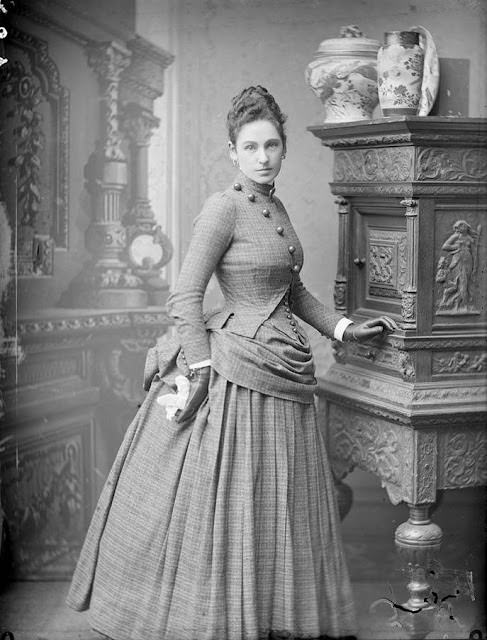
Poised beside an elaborately carved cabinet, a Victorian woman meets the camera with a steady, composed gaze that feels both intimate and formal. Her tailored bodice fastens in a neat row of prominent buttons, shaping a fashionable late-1800s silhouette that balances structure with grace. The full skirt falls in heavy folds, suggesting the weight and workmanship of period textiles, while her swept-up hair and calm posture complete the look of cultivated respectability.
Details in the room underscore the era’s love of ornament and display: carved panels, turned legs, and decorative reliefs turn everyday furniture into statement pieces. On top, ceramic vessels—one shaped like a lidded jar, another like a pitcher—add a domestic touch, hinting at drawing-room tastes where craft, collecting, and refinement belonged to the same social language. Even the woman’s resting hand on the furniture reads as deliberate, connecting fashion to the material culture that framed Victorian life.
Rather than a fleeting candid moment, the portrait carries the carefully arranged atmosphere typical of late nineteenth-century studio photography and its aspiration toward elegance. Clothing here is more than personal style; it signals class, propriety, and the discipline of a well-fitted wardrobe in an age when appearances were read closely. For anyone exploring Victorian ladies, late 1800s fashion, and the culture of interiors, this image offers a rich, textured glimpse into how women were presented—and how they chose to present themselves—within a world of polished surfaces and social expectations.