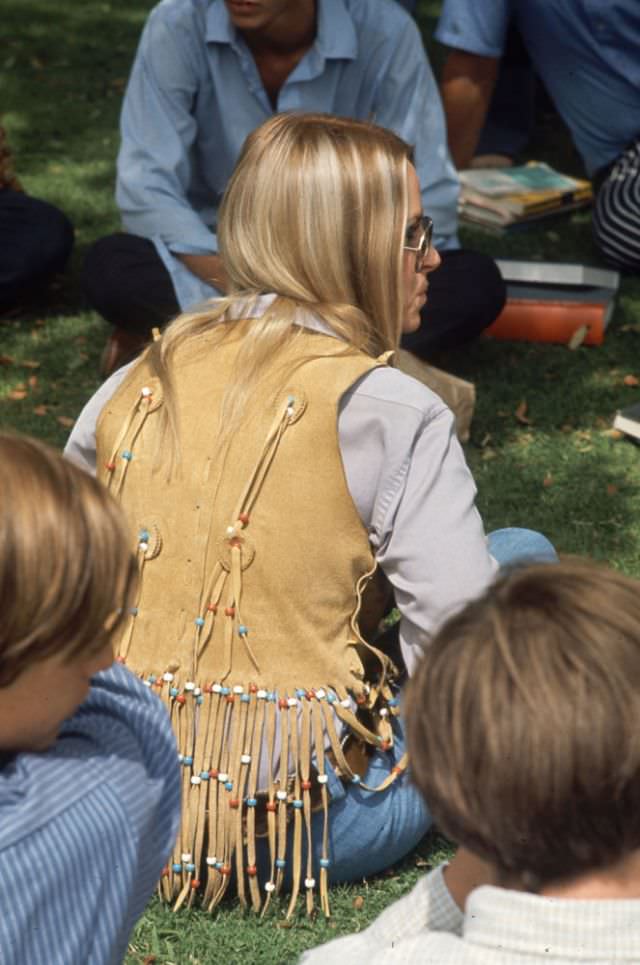
Long blond hair and wire-rimmed glasses frame the profile of a Southern California high schooler seated on the grass, turned slightly away from the camera as if listening in. The center of attention is a buckskin vest, soft-toned and heavily fringed, with lacing and small beads that catch the light in a casual outdoor setting. Around the student, other teens in simple shirts and jeans sit close together, creating the relaxed, communal feel associated with late-1960s youth culture.
Buckskin and fringe signaled more than a fashion preference in 1969; it was part of a broader hippie style that mixed handmade details with a back-to-nature look. The vest’s decorative ties and beadwork echo the era’s appetite for craft, individuality, and clothing that looked lived-in rather than polished. Paired with denim and an easy posture, the outfit reads as everyday rebellion—subtle, wearable, and perfectly suited to campus life.
Set against a lawn dotted with fallen leaves and schoolbooks nearby, the scene suggests a break between classes or an informal gathering outdoors, where conversation mattered as much as appearance. It’s an intimate glimpse of teenage style at the height of the counterculture, when high school fashion absorbed influences from music, protest, and the emerging youth market. For anyone searching mid-century Americana, 1960s student life, or Southern California hippie fashions, this image offers a grounded, human-scale portrait of the era’s look and mood.