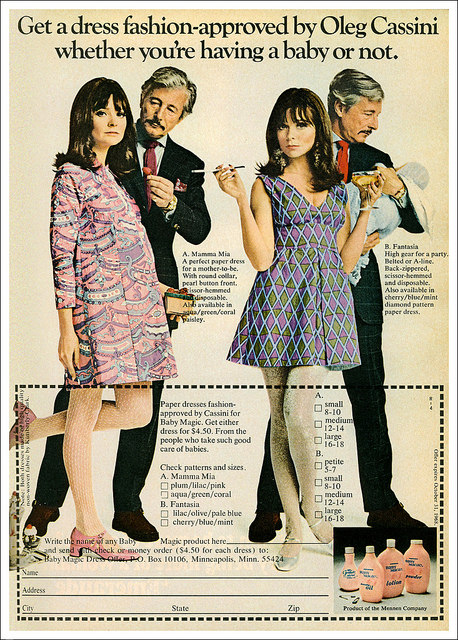
Bold lettering promises a “fashion-approved” dress by Oleg Cassini, and the ad leans hard into the era’s appetite for novelty: paper dresses sold as quick, stylish, and surprisingly practical. Two models pose in sleeveless, geometric mini shifts—one in pinks, the other in blues—while well-dressed men hover in the background, underscoring how 1960s fashion culture often framed women’s trends through celebrity endorsement and magazine polish. Even the cheeky line about wearing it “whether you’re having a baby or not” signals how marketing copy could be playful and provocative in the same breath.
Across the page, the selling points read like a time capsule of mid-century consumer confidence: disposable convenience, “toss-away” ease, and a ready-to-mail order form that turns a fleeting trend into something anyone could buy from home. The patterns—bold diamonds, high-contrast color blocks, and pop-art energy—reflect the decade’s fascination with modern design, while the short hemline and simple cut hint at how paper garments embraced minimal tailoring to keep costs down. Mentions of sizes, colorways, and a low price make the pitch feel both democratic and impulsive, the perfect recipe for a fad.
Paper dresses didn’t last long, but their cultural footprint is outsized—part fashion experiment, part advertising gimmick, and part symbol of a society learning to love single-use everything. For readers drawn to vintage fashion history, 1960s style, and mod-era marketing, this image captures the collision of couture branding and disposable materials in one unforgettable spread. It’s a reminder that “groovy garments” weren’t just about looking modern; they were about buying into modernity, one throwaway trend at a time.