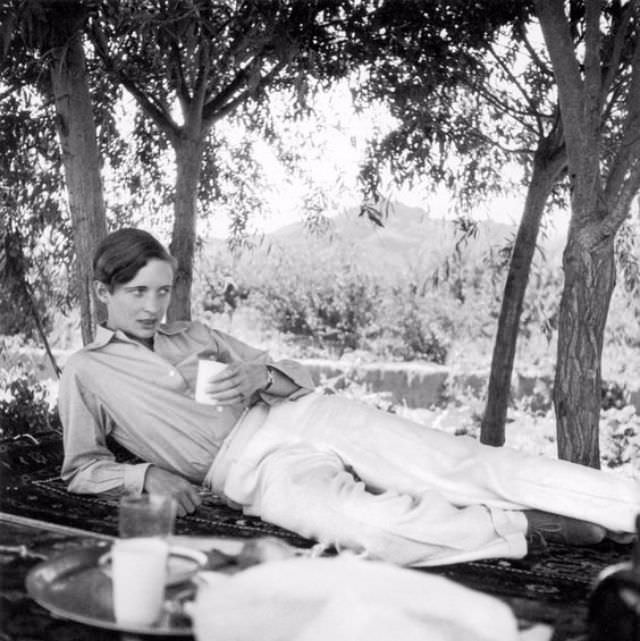
Lounging beneath a canopy of trees, the figure in this photo wears a crisp button-front shirt tucked into high-waisted, wide-legged trousers—an easy, confident silhouette that speaks to the tomboy spirit of 1930s women’s fashion. The relaxed pose, drink in hand, softens the sharp tailoring, while the clean lines and practical cut hint at a wardrobe built for movement rather than ornament. Even without the era’s typical frills, the look feels deliberate, modern, and quietly rebellious.
Tomboy style in the 1930s wasn’t only about “dressing like a man”; it was a way of borrowing structure—collars, cuffs, pleats, and trousers—and making it personal. Shirts like this one, worn with a belt and roomy pants, created a streamlined profile that contrasted with more conventional feminine daywear. The effect is subtle but powerful: a visual claim to comfort, autonomy, and a different kind of elegance rooted in utility.
Fashion and culture meet in moments like this, where clothing becomes a clue to changing attitudes about gender, leisure, and self-presentation between the wars. For readers searching for 1930s tomboy outfits, women in trousers, and vintage androgynous style, this image offers a grounded example of how tailored basics could signal independence without a word being spoken. It’s a reminder that the “sharp edge” of the decade often lived in everyday choices—how someone sat, what they wore, and the ease with which they wore it.