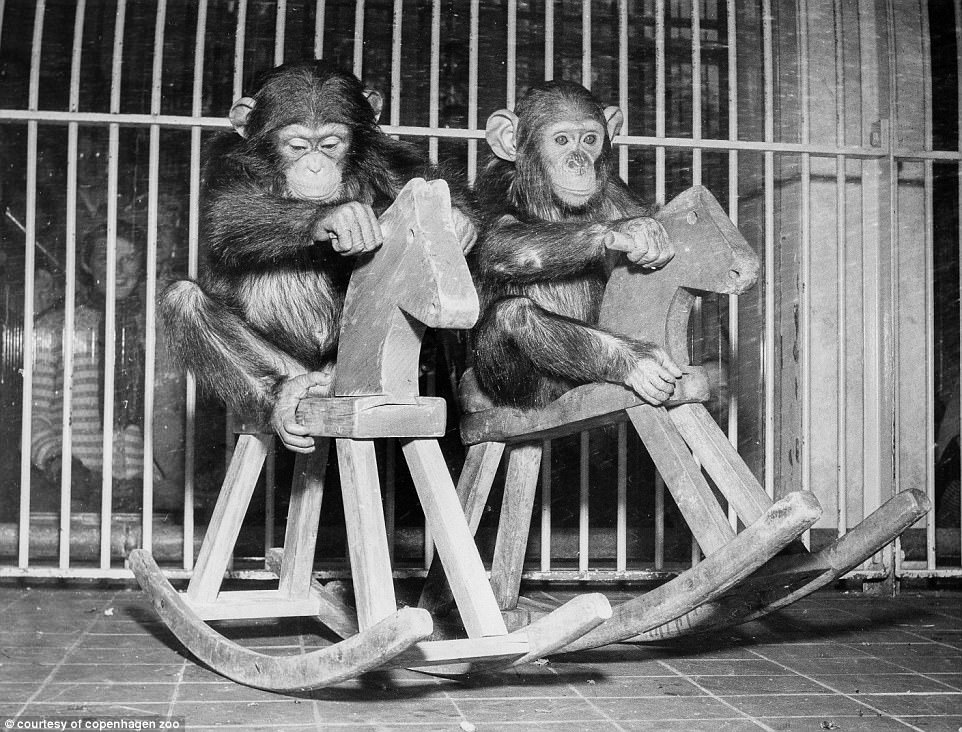
Behind the enclosure bars, two young chimpanzees sit astride wooden rocking horses as if they were children in a playroom. Their small hands grip the handles and their feet tuck onto the curved runners, turning a simple toy into an almost uncanny portrait of imitation and curiosity. The contrast between the sturdy, homemade-looking horses and the stark, tiled floor makes the scene feel both charming and a little strange.
Moments like this hint at an era when captive animals were often “humanized” for public amusement, with toys and props meant to entertain visitors as much as the animals themselves. The photo leans into that idea from the post title—animals treated like people, complete with their own playthings—while also revealing the intelligence and expressiveness that made primates such powerful attractions. Even without a visible date or clear setting, the staging speaks to older zoo culture and its changing notions of care, enrichment, and spectacle.
For readers drawn to unusual vintage zoo photos, this image offers a memorable snapshot of how people once tried to bridge the gap between humans and animals through everyday objects. It’s funny at first glance, but it also invites questions about what “enrichment” meant then compared with modern animal welfare standards. Look closely at their faces and posture, and the toy horses become more than a gag—they become evidence of how captivity shaped both animal behavior and human expectations.