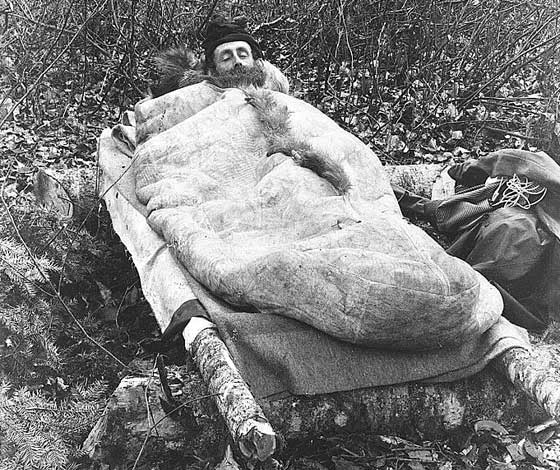
Nestled among brush and fallen branches, a bundled camper dozes with only his face peeking out from an oversized animal-skin sleeping bag. The thick hide slumps and folds like a heavy blanket, making the whole scene feel both rugged and oddly cozy, as if warmth came more from sheer mass than from tailored design. It’s an instantly memorable glimpse of outdoor life in 1888, when comfort on the trail often meant improvisation and endurance.
The humor is undeniable—there’s something almost theatrical about being swallowed by a pelt—but the photograph also hints at practical realities. In cold, damp conditions, a skin bag would have offered insulation, wind resistance, and a measure of protection from ground chill, even if it looked awkward to haul and arrange. Details in the surrounding gear and the rough bedding under the sleeper suggest a no-frills camp setup, the kind that prized function over refinement.
For anyone searching for historical camping photos, 19th-century outdoor gear, or early sleeping bag history, this image lands as both curiosity and evidence. It reminds us that “modern” comforts didn’t appear overnight; they were shaped by experiments like this, where materials were borrowed directly from the natural world. Funny at first glance, it lingers as a small story about survival, ingenuity, and how people once made a night outdoors feel possible.