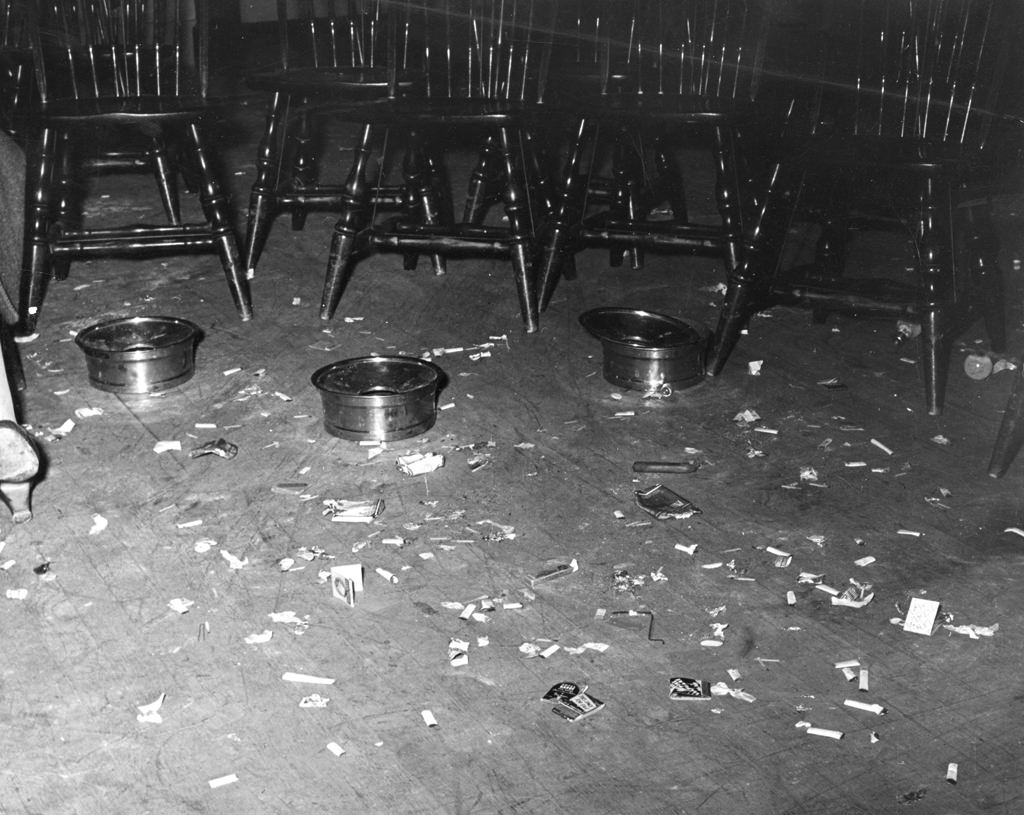
After the laughter and speeches died down, what remained on the floor told the whole story: scattered matchbooks, crumpled paper, and a few metal ashtrays gleaming under rows of wooden chairs. It’s the kind of lived-in mess that feels instantly familiar, the aftermath of a long night when people sat close, talked politics, and let the room fill with smoke and conversation. The title points to Connecticut in 1941 and a gathering of GOP women, and the humor comes through in this unguarded, “morning after” view.
The word “smoker” carries a specific old-school flavor—part social club, part fundraiser, part networking event—usually associated with male-only political culture. Here, the twist is the women taking that space for themselves, leaning into the era’s rituals with a wink. Even without faces in frame, the empty chairs and debris suggest a crowded meeting that ran late, with plenty of cigarettes struck, pamphlets handled, and small talk turning into strategy.
As a historical photo, it’s a reminder that political organizing isn’t only banners and podiums; it’s also ashtrays, matchbooks, and the mundane evidence of time spent together. For anyone searching for 1941 Connecticut history, Republican women’s clubs, or wartime-era American political culture, this image offers a textured glimpse of how grassroots groups gathered and socialized. Funny or not, it preserves a moment when participation looked ordinary—and that ordinariness is exactly what makes it valuable.