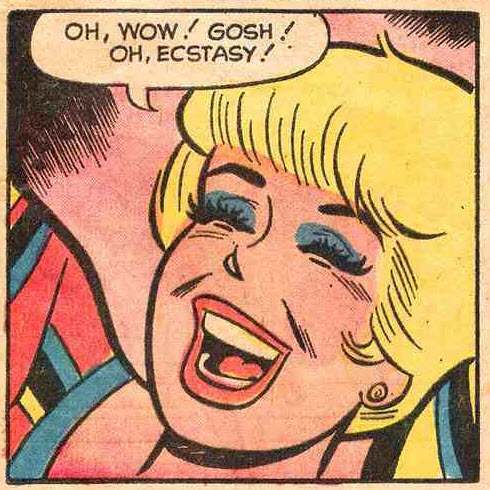
A single panel says plenty about how far “funny” comics could stretch when the 1970s arrived. In close-up, a blonde character throws her head back with heavy eye makeup and an exaggerated expression, while the speech balloon gushes, “OH, WOW! GOSH! OH, ECSTASY!” The bold outlines, flat color, and melodramatic acting lean into pulp-style exaggeration that reads as both cheeky and intentionally provocative.
Archie Comics built its reputation on clean-cut teen humor, yet the era’s shifting tastes nudged many publishers toward flirtier jokes and more adult-coded innuendo. Here, the comedy isn’t in subtlety—it’s in the overstatement, the knowing wink, and the way desire is rendered as cartoon spectacle. That tension between wholesome branding and spicier storytelling helps explain why these “lusty pages” still spark curiosity among collectors and pop-culture historians.
Browsing artwork like this also highlights the mechanics of print comics: dot patterns, slightly off-register color, and the grain of aged ink that give the panel its period feel. For readers searching the history of Archie Comics in the 1970s, this image serves as a quick portal into changing standards, marketing experiments, and the boundaries of mainstream humor. It’s a reminder that even familiar characters and styles could be remixed when cultural heat rose—and publishers wanted to keep up.