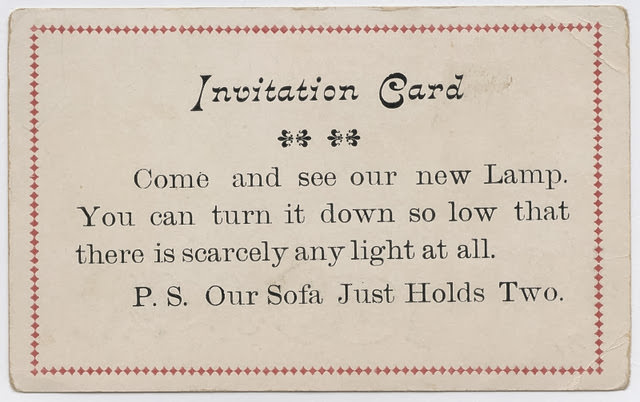
Wit arrives in miniature form on this “Invitation Card,” framed by a neat red border and printed in a playful, old-fashioned type. The message invites the recipient to “come and see our new Lamp,” then immediately undercuts any lofty promise by boasting it can be turned down “so low that there is scarcely any light at all.” It’s the kind of joke that lands because it sounds like a genuine household brag—until the punchline reveals the absurdity.
The postscript sharpens the humor with a knowing nod to social etiquette: “Our Sofa Just Holds Two.” Read plainly, it’s a practical note about seating; read socially, it’s a mischievous constraint that engineers intimacy while pretending to be logistical. Cards like this worked as 19th-century icebreakers, letting people flirt with boundaries—conversation, courtship, and domestic display—under the safe cover of comedy.
For anyone interested in Victorian-era humor, antique ephemera, or the history of social calls, this acquaintance-style invitation offers a charming glimpse of how people marketed themselves with a wink. The lamp, the scarce light, and the too-small sofa sketch an entire scene of parlor manners and playful intent, all in a few lines of printed text. As a historical photo of a humorous invitation card, it’s a reminder that even in the 19th century, meeting new people often started with a carefully crafted joke.