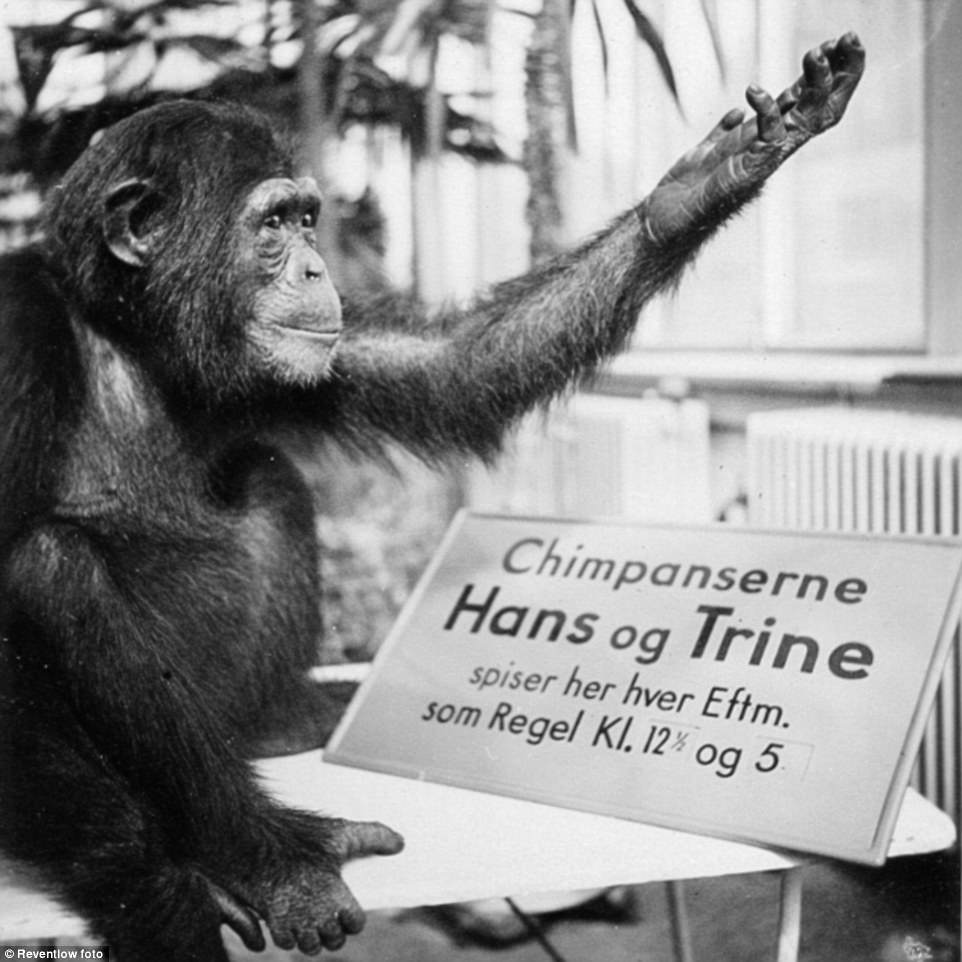
A chimpanzee lifts an arm in a surprisingly human gesture, as if greeting the passing crowd with a practiced wave. The moment is caught in crisp black-and-white, with the animal’s alert gaze and expressive hand doing most of the storytelling. Behind the pose sits a simple display setup that suggests an organized public attraction rather than a private snapshot.
Beside her, a board provides visitor-friendly details in Scandinavian-language text: “Chimpanserne Hans og Trine,” followed by a note about when they typically eat. That little sign turns the scene into a small piece of zoo history, where information was presented plainly and schedules were part of the spectacle. It also hints at how animals were introduced to the public—through names, routines, and a curated sense of familiarity.
For a modern viewer, the image lands as both funny and thought-provoking, balancing charm with the realities of captivity and performance. The chimp’s wave reads like a shared joke between species, yet the sign and staging remind us how carefully such encounters were arranged for tourists. If you’re drawn to historical zoo photographs, vintage animal portraits, or the changing culture of wildlife exhibitions, this post offers a memorable glimpse into that world.