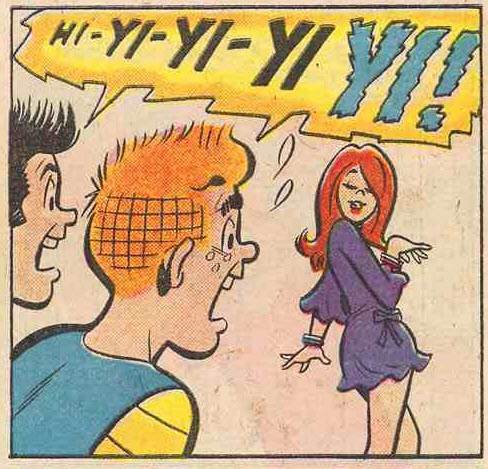
A breathless “HI-YI-YI-YI!!!” streaks across the panel like a siren, setting the tone for the kind of cheeky exaggeration that crept into some 1970s-era Archie-style humor. Two wide-eyed onlookers dominate the left edge, their faces frozen in astonishment, while a red-haired figure in a short robe-like outfit turns away with a teasing glance. The bold colors, thick outlines, and compressed staging make the gag instantly readable, the sort of punchline-first storytelling that kept these comics flipping along at a fast pace.
What stands out is how the humor leans into flirtation without needing explicit detail—suggestion, reaction, and timing do the work. The character’s pose and playful expression cue the audience, but the real comedy lands in the exaggerated male response: open mouth, sweat, and that unmistakable cartoon panic. It’s an example of how mainstream funny comics could “turn up the heat” by borrowing the visual language of pin-up culture and sitcom innuendo while staying inside the bounds of mass-market entertainment.
For readers hunting the “lusty pages” vibe promised by the title, this image is a tidy snapshot of changing tastes in comic-book comedy during the decade. It also speaks to Archie Comics’ talent for calibrating tone—keeping the world bright and familiar while edging toward a more grown-up wink that reflected broader pop culture. Whether you’re here for nostalgia, comics history, or the evolution of suggestive humor in 1970s funny books, this panel offers a lively doorway into that era’s playful push-and-pull between innocence and allure.