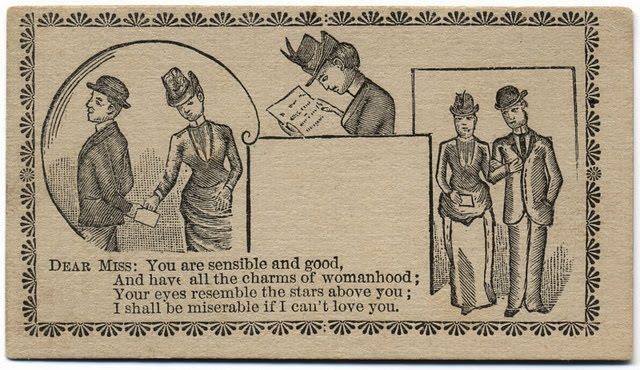
Wit and courtship meet on this 19th-century humorous acquaintance card, where polite society’s rules are bent just enough to invite a smile. The illustration follows a small sequence: a well-dressed gentleman approaches, a lady receives a card, and the pair appear again as a potential couple—an entire social drama condensed into a few pen-and-ink scenes framed by decorative borders.
“Dear Miss: You are sensible and good, And have all the charms of womanhood; Your eyes resemble the stars above you; I shall be miserable if I can’t love you.” The verse is deliberately overwrought, playing with the era’s taste for flowery compliments while gently mocking it at the same time. Seen today, the rhyme reads like a period pickup line—earnest in tone, yet clearly designed to be passed around, laughed at, and used as a conversation-starter rather than a solemn declaration.
Cards like this were part novelty, part social tool, offering a safe script for introductions when etiquette could make direct flirting risky. For collectors of Victorian ephemera and anyone interested in the history of humor, the piece is a reminder that people in the past enjoyed jokes about romance much as we do now—just packaged in ink, paper, and a neatly rhymed plea for attention. The Art of Breaking the Ice in the 19th Century invites a closer look at how printed flirtation helped strangers become acquaintances, one cheeky card at a time.