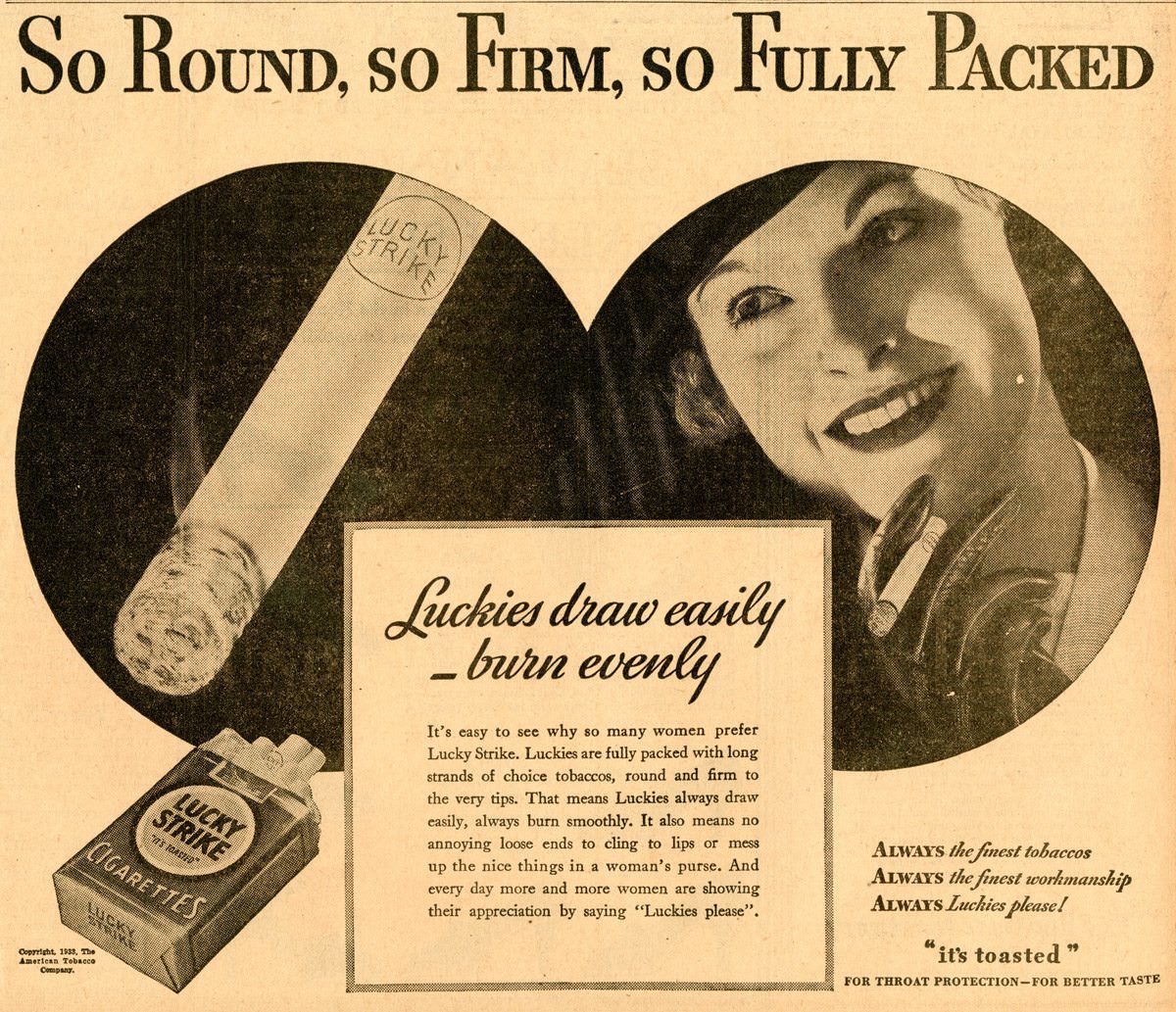
Bold lettering stretches across the page—“So Round, so Firm, so Fully Packed”—and it doesn’t take long to see why modern readers raise an eyebrow. The layout pairs a close-up cigarette tip with a smiling woman holding a cigarette, all framed in smooth circles that quietly direct the eye. As a piece of old-school print advertising, it’s polished, confident, and intentionally suggestive without ever saying anything outright.
Down in the copy, Lucky Strike leans hard on sensory promises: “Luckies draw easily—burn evenly,” along with talk of “long strands of choice tobaccos” and a cigarette that stays “round and firm to the very tips.” The language is selling consistency and “workmanship,” but it also flirts with double meanings through rhythm, repetition, and carefully chosen adjectives. Even the reassurance about “no annoying loose ends” reads differently today, showing how innuendo can hide in plain sight when culture and censorship shape what can be implied but not stated.
What makes this kind of vintage ad so fascinating is how it reflects its era’s marketing playbook—glamour, gendered persuasion, and a wink that could pass as innocent. The same phrases that once sounded like straightforward product talk now land as comedic, even a little shocking, which is exactly the surprise behind “Innocent or Not?” If you enjoy spotting hidden meanings in old ads, comics, and catalogs, this is the sort of artifact that turns a simple sales pitch into an accidental time capsule of humor.