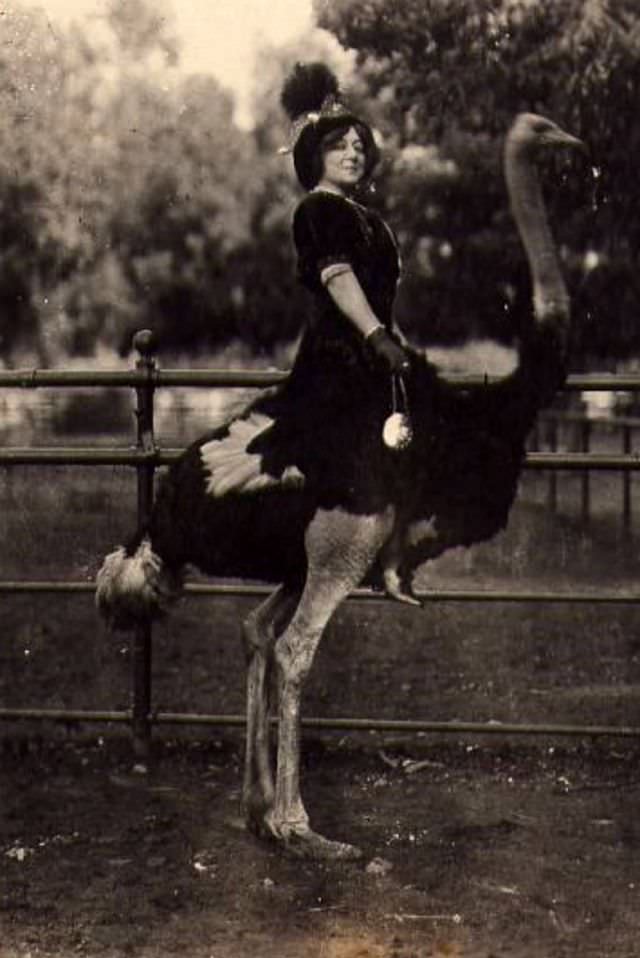
Perched high on an ostrich’s broad back, a confidently dressed rider turns toward the camera with an expression that’s equal parts playful and composed. The tall bird, all long legs and lifted neck, stands inside a fenced enclosure with trees blurring softly in the background, giving the scene the feel of a carefully managed farm rather than wilderness. Even in its grainy tones, the photo sells the novelty of the moment—part rural workday, part turn-of-the-century spectacle.
Ostrich farms were a genuine early-20th-century fascination, tied to the demand for feathers that trimmed hats, boas, and fashionable accessories. Images like this one hint at how these operations marketed themselves: visitors could see the birds up close, pose for daring portraits, and take home a story as memorable as any postcard. The rider’s feathered hat is a sly visual echo of the very industry that made ostriches so commercially desirable in the 1910s.
There’s humor here, but also a revealing glimpse of how people once staged “exotic” animals for entertainment and profit. The sturdy corral rails, the open yard, and the deliberate pose suggest a setting designed for safe handling and showmanship, inviting modern viewers to look beyond the gag and consider the era’s attitudes toward agriculture, fashion, and leisure. For anyone searching for ostrich farm history or quirky 1910s photography, this portrait offers a striking snapshot of a short-lived craze that left a long trail of unforgettable images.