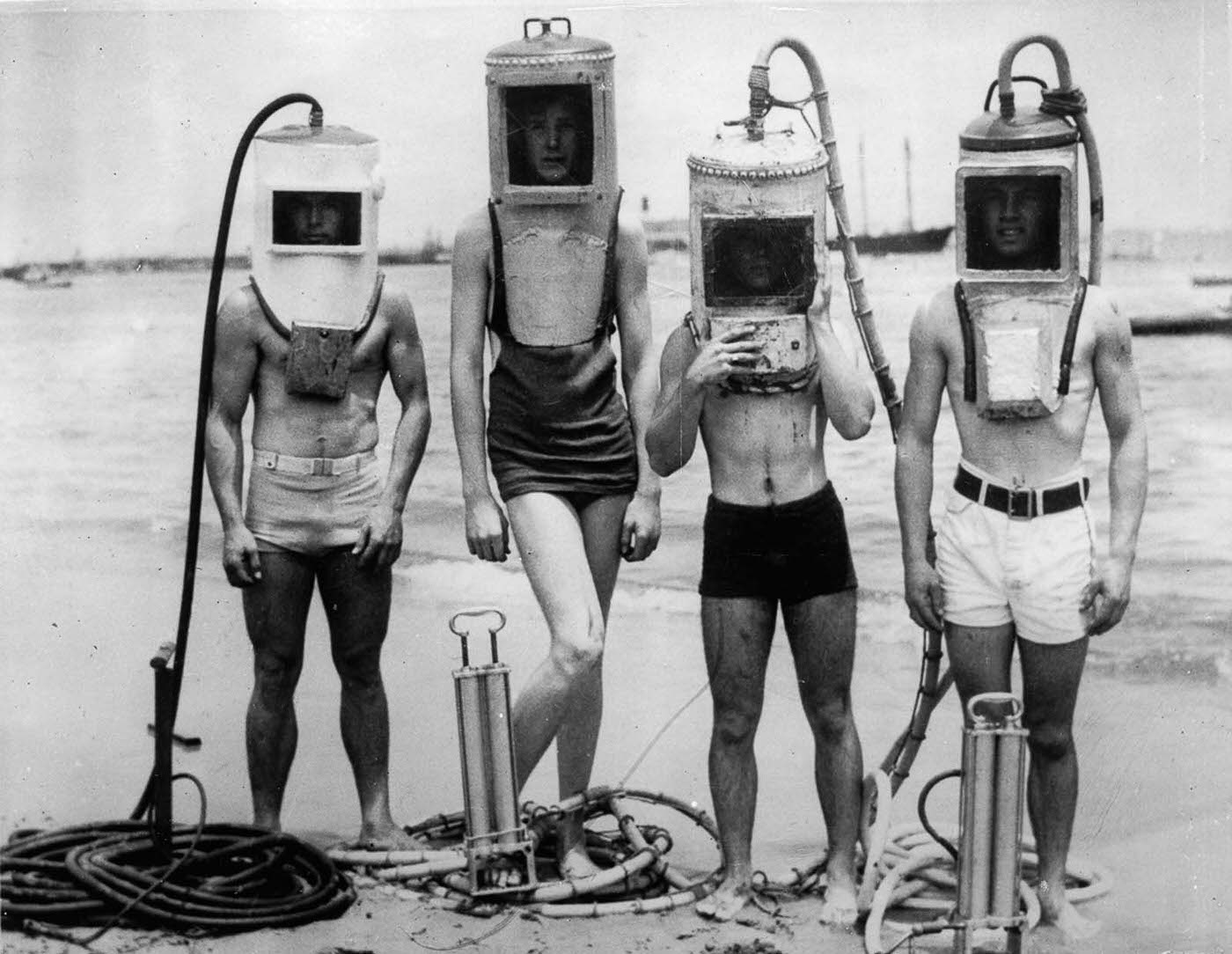
On a Los Angeles shoreline in 1933, four boys stand like a small, homemade diving crew, their bodies in swim trunks but their heads sealed inside boxy metal helmets. Each mask has a flat viewing window and a heavy, riveted look, with hoses looping up and back as if they’re ready to be tethered to the surface. The sea sits calm behind them, while coiled lines and simple gear at their feet hint at trial-and-error engineering more than professional apparatus.
What makes the scene unforgettable is the source of their “technology”: sections of hot water heaters, boilers, and other readily scavenged junk turned into underwater headgear. The helmets vary in shape and finish, suggesting different makers, different scrap piles, and different ideas of what might keep water out and air flowing in. One boy lifts a hand to his faceplate, as though adjusting the fit or clearing the view—an ordinary gesture made strange by a contraption that looks part industrial, part science fiction.
The photo reads as a snapshot of Depression-era ingenuity, when curiosity could be built from whatever could be found, borrowed, or reworked. It’s also a vivid piece of Los Angeles history, blending beach culture with backyard invention at the edge of the Pacific. For anyone searching vintage Los Angeles photos, 1930s youth culture, or early DIY diving equipment, this image delivers a rare, human-scale look at how imagination and scrap metal could briefly open a doorway to the underwater world.