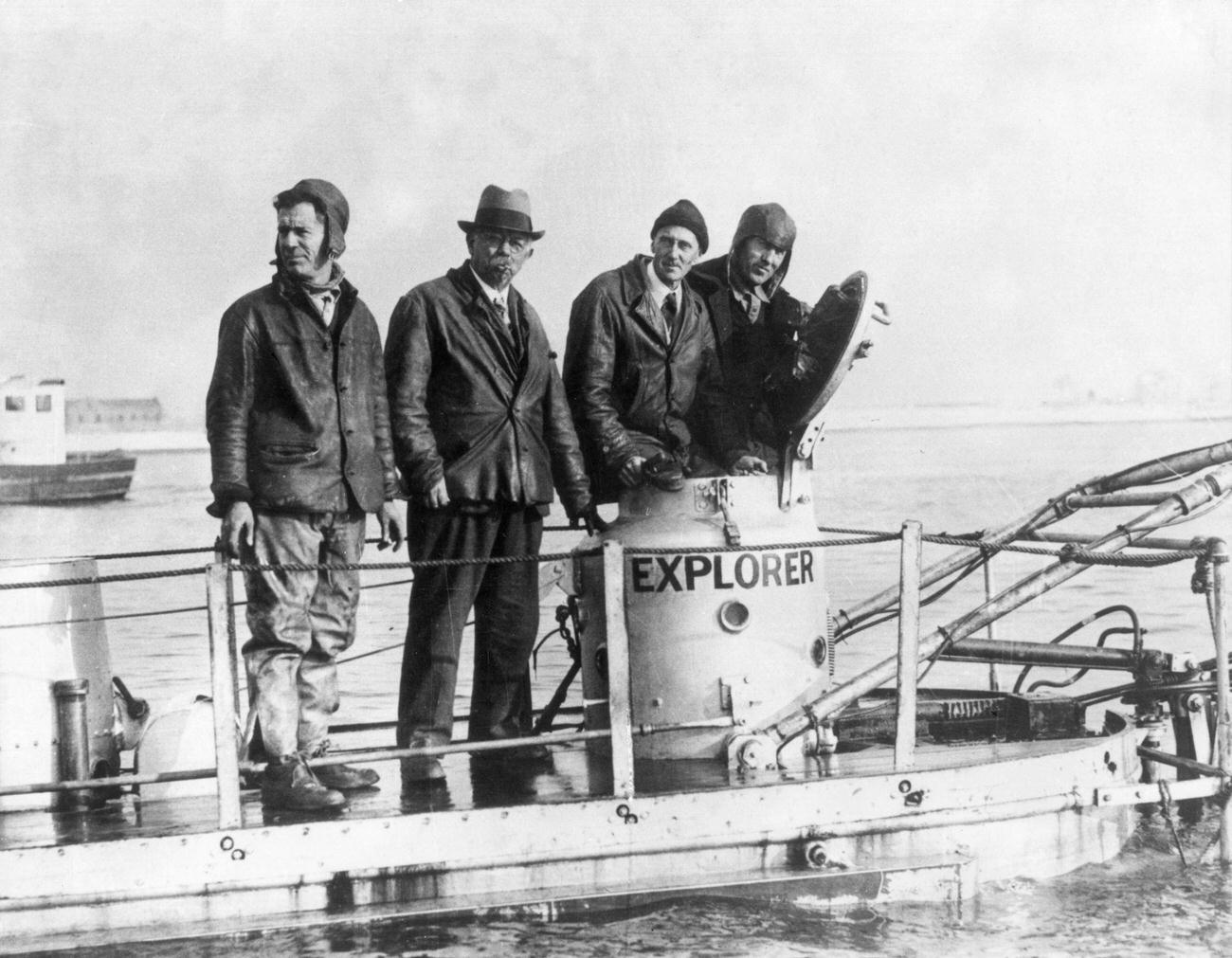
Four figures stand shoulder to shoulder on the wet deck of the Explorer submarine, bundled in heavy coats and caps against the chill of Long Island Sound. The open hatch beside them, stenciled with the bold word “EXPLORER,” turns the scene into more than a portrait—this is a working platform, poised between sea and steel. In 1932, American Navy diver Frank Crilley joins inventor Simon Lake, naturalist William Beebe, and Jack Dunbar in a moment that suggests both camaraderie and concentration before another descent.
Details in the photograph point to the practical realities of early undersea exploration: the low railings, the slick surface underfoot, the cramped access through the hatch, and the clustered fittings and lines that hint at a vessel designed for experimentation rather than comfort. Their clothing reads like field gear, chosen for wind and spray rather than display, and their steady stances convey the seriousness of a job where visibility, pressure, and machinery could quickly become unforgiving. It’s a snapshot of innovation in progress, when diving and submersible technology were still being proven in real water, not just on drawing boards.
Placed within the broader story of 1930s invention, the Explorer represents an era when explorers, engineers, and professional divers often worked side by side to push the frontier downward. The combination of names in the title—Crilley, Lake, Beebe, and Dunbar—makes this image especially valuable for readers interested in maritime history, submarine development, and the early culture of ocean science. For anyone tracing the roots of modern underwater research and deep-sea equipment, this deck-side gathering offers a vivid starting point.