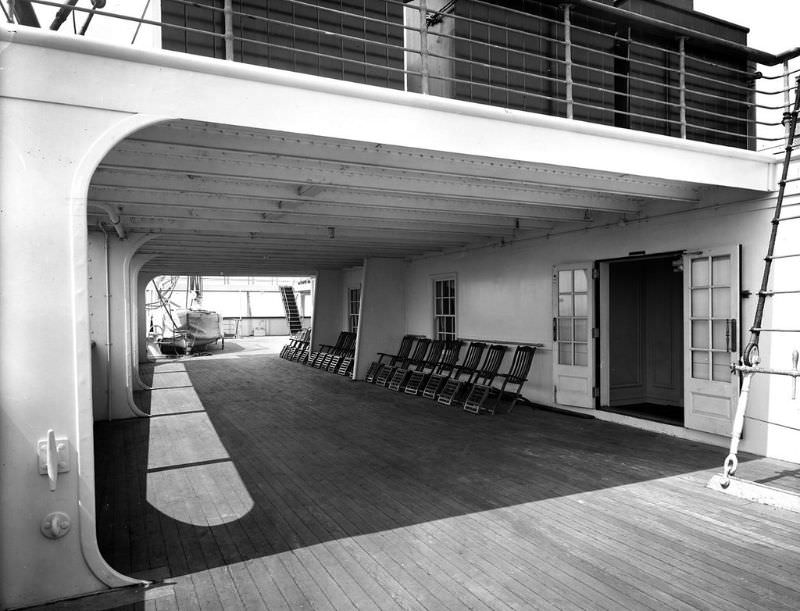
Along the starboard side of Aquitania’s A Deck, the 2nd Class promenade stretches out in clean, confident lines—planked timber underfoot, white-painted steel overhead, and a long run of deck chairs waiting for the next crossing’s ritual of sea air and slow conversation. The sheltered section beneath the Boat Deck aft creates a calm corridor of shade, where the geometry of beams and railings frames the open sea beyond. Even without a crowd, the space feels busy with anticipation, designed for strolling, lingering, and watching the horizon change.
Details in the scene speak to early 20th-century ocean liner engineering as much as to comfort: generous headroom, rounded structural openings, and wide passageways that manage both movement and weather. Light pools across the deck in angled bands, suggesting how carefully these promenades balanced exposure and protection. Doors and windows along the bulkhead hint at the interior world nearby—cabins, lounges, and the quieter rhythms of shipboard life just steps away from salt wind.
Dated to May 1914 in the title, the photograph sits on the eve of a profound global shift, when transatlantic travel still carried a certain optimism and modernity. Aquitania’s second-class facilities—spacious, orderly, and deliberately welcoming—underscore how liners marketed “in-between” comfort to a growing class of travelers. For readers searching maritime history, Cunard liner interiors, or early ocean travel, this view of the promenade deck offers a crisp, atmospheric look at how design shaped the everyday experience of passage at sea.