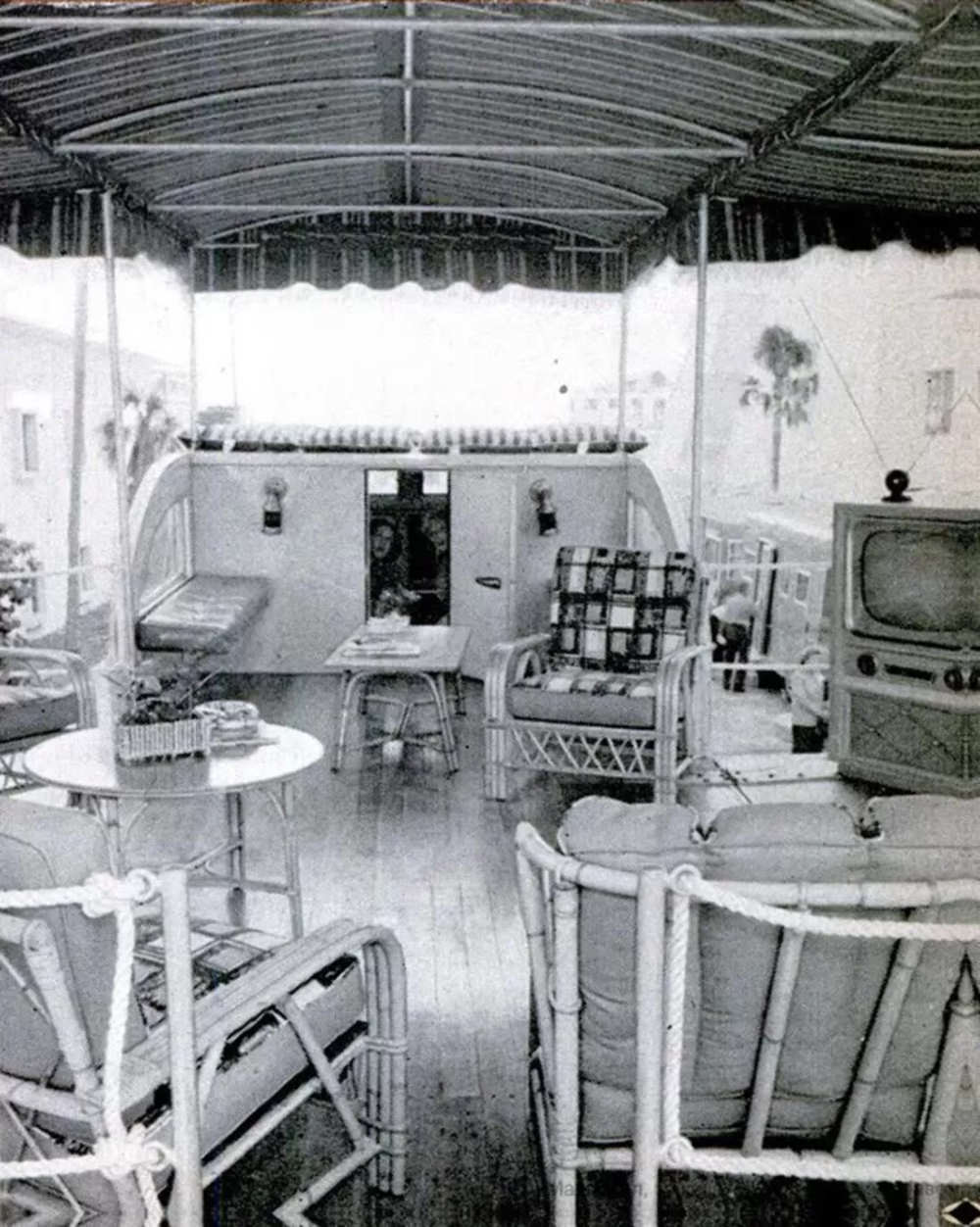
Under a broad, arched canopy roof, the “Executive Flagship” concept looks less like a simple camper and more like an outdoor living room that just happens to be mobile. Wicker-style seating with thick cushions frames a tidy space, while small tables suggest a setup meant for conversation, paperwork, or cocktails at day’s end. In the background, a compact trailer body with a centered doorway hints at sleeping and storage tucked away behind the social area.
Mid-century comfort is written into the details: a television cabinet stands ready at the right edge, turning travel into a staycation long before “road-trip entertainment” became a marketing slogan. The open deck-like floor, matched furniture, and shaded cover create an inviting lounge that blurs the boundary between patio and vehicle. Even without explicit branding visible, the design language fits the era’s optimism about technology—more convenience, more leisure, more of home brought along for the ride.
For anyone fascinated by 1950s inventions, retro RV history, or the evolution of luxury travel trailers, this photo captures an early vision of the mobile office-and-home lifestyle. It’s a reminder that today’s van-life layouts and rolling workspaces have deep roots in postwar experimentation, when engineers and dreamers tried to pack modern living into ever more inventive forms. The Executive Flagship’s “all in one vehicle” promise reads like a time capsule of ambitions that still shape how we travel—and work—now.