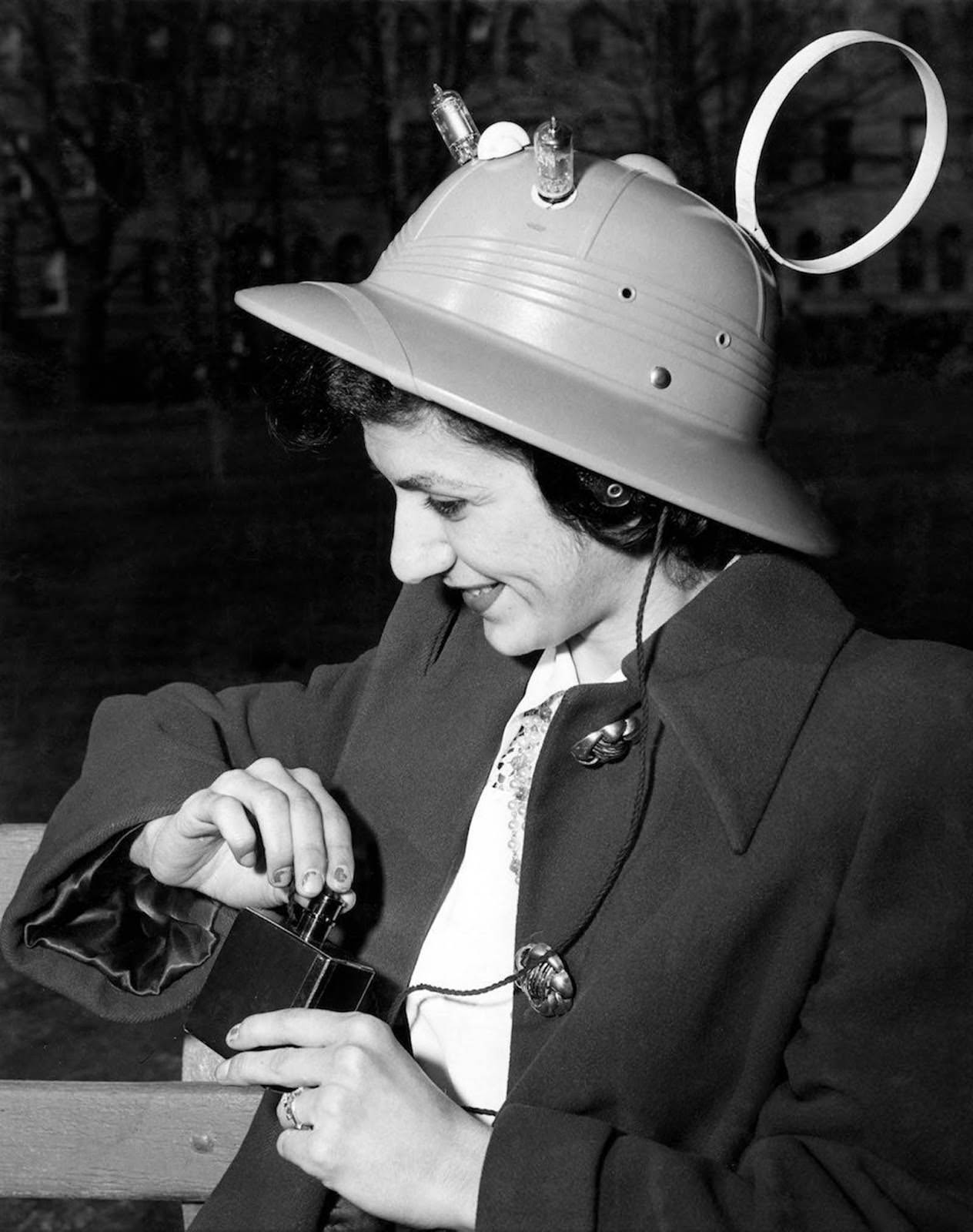
Few gadgets sum up early consumer tech optimism quite like the “radio hat,” a wearable receiver built into a hard-brimmed helmet and topped with conspicuously mounted tubes and a loop-like antenna. In the photograph, the wearer smiles as she adjusts a small control box in her hands, the wiring leading back toward the headpiece—an everyday outfit momentarily transformed into a scene of portable invention. The blend of fashion silhouette and exposed electronics makes the device feel both practical and delightfully theatrical, exactly the kind of novelty that drew crowds and column inches.
Publicity did the heavy lifting, and the post title hints at how effectively marketers turned a quirky prototype into a product sold from coast to coast in the United States. That national reach mattered: it suggests department stores, mail-order counters, and window displays where passersby could imagine taking radio programming along on errands, commutes, or leisure outings. The hat’s design telegraphs modernity—hands-free listening, personal entertainment, and the promise that technology could be worn as easily as clothing.
Looking closely, the image also captures a wider story about inventions becoming consumer culture, where spectacle and salesmanship often moved as fast as engineering. Wearable electronics may seem like a contemporary obsession, yet this radio hat shows earlier generations already experimenting with mobility, convenience, and status—ideas that still drive innovation today. For readers interested in vintage technology, novelty headgear, and the history of radio in America, this photograph is a vivid reminder that yesterday’s “future” sometimes came with a brim and an antenna.