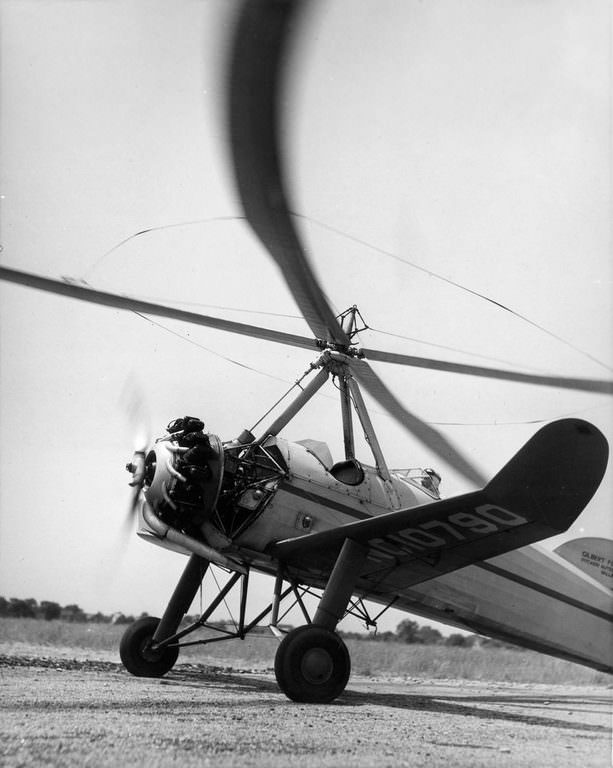
Rotor blades blur overhead as an autogyro idles on a rough field, its engine cowl and open framework giving the machine a skeletal, experimental look. The pilot, bundled into the cockpit, appears to be running through the last moments of a pre-flight routine while the aircraft’s big wheels and compact fuselage sit ready for a short roll. Markings on the tail and a glimpse of lettering along the side hint at an era when aviation was still defining its own language of numbers, badges, and brand names.
In New York in 1930, the autogyro represented a thrilling middle ground between airplane and helicopter, promising steadier low-speed handling and shorter takeoffs than many conventional aircraft of the day. Photos like this are a reminder that “inventions” weren’t just drawings on paper—they were loud, oily, wind-battered contraptions tested in open air, where success depended on both engineering and nerve. The scene feels poised between caution and optimism, the pilot trusting a new kind of lift generated by the spinning rotor above.
Looking closely, the textures tell the story: dust along the ground, the struts and cables braced against vibration, and the propeller’s motion frozen into a faint haze. For readers interested in early flight, experimental aircraft, and New York’s role in American aviation history, this image captures the hands-on reality of innovation during the interwar years. It’s a small moment before departure, yet it carries the bigger ambition of an age determined to make the sky more accessible.