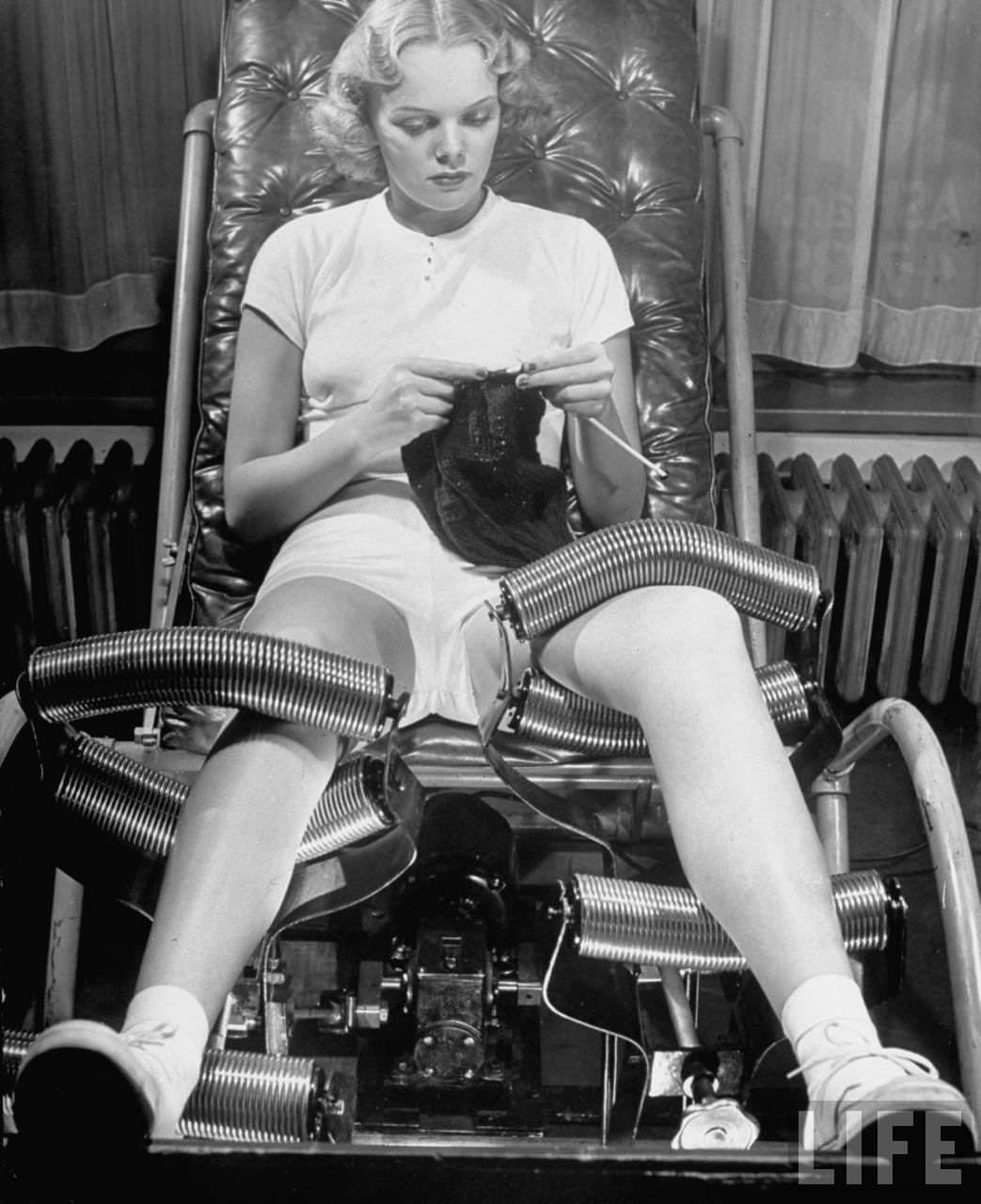
Model Pat Ogden sits back in a deeply padded salon chair, eyes lowered to her knitting as if the scene were an ordinary afternoon at home. The quiet domestic gesture contrasts with the conspicuous apparatus arranged around her legs: ribbed metal rollers positioned from thigh to ankle, held in place by a framework that looks more workshop than boudoir. Behind her, radiator fins and heavy curtains add to the sense of an indoor clinic-like setting where comfort and machinery meet.
What stands out is the era’s faith in “slenderizing” technology—devices that promised transformation through vibration, pressure, and repetition rather than sweat or diet. The rollers hug the contours of her calves and thighs, their industrial texture catching the light, while the chair’s tufted upholstery suggests luxury marketed alongside modern innovation. It’s a compelling snapshot of the beauty industry’s long history of selling science-flavored solutions, especially to women expected to treat shaping the body as routine maintenance.
For readers interested in vintage wellness inventions, early fitness trends, or the history of beauty salons, this photograph offers a vivid point of entry. The composed expression, the knitting needles, and the mechanical leg rollers together tell a story about time-saving promises and the normalization of body work as leisure. Seen today, the image feels both quaint and strangely familiar—an ancestor to contemporary gadgets that still claim smoother, slimmer results at the push of a button.