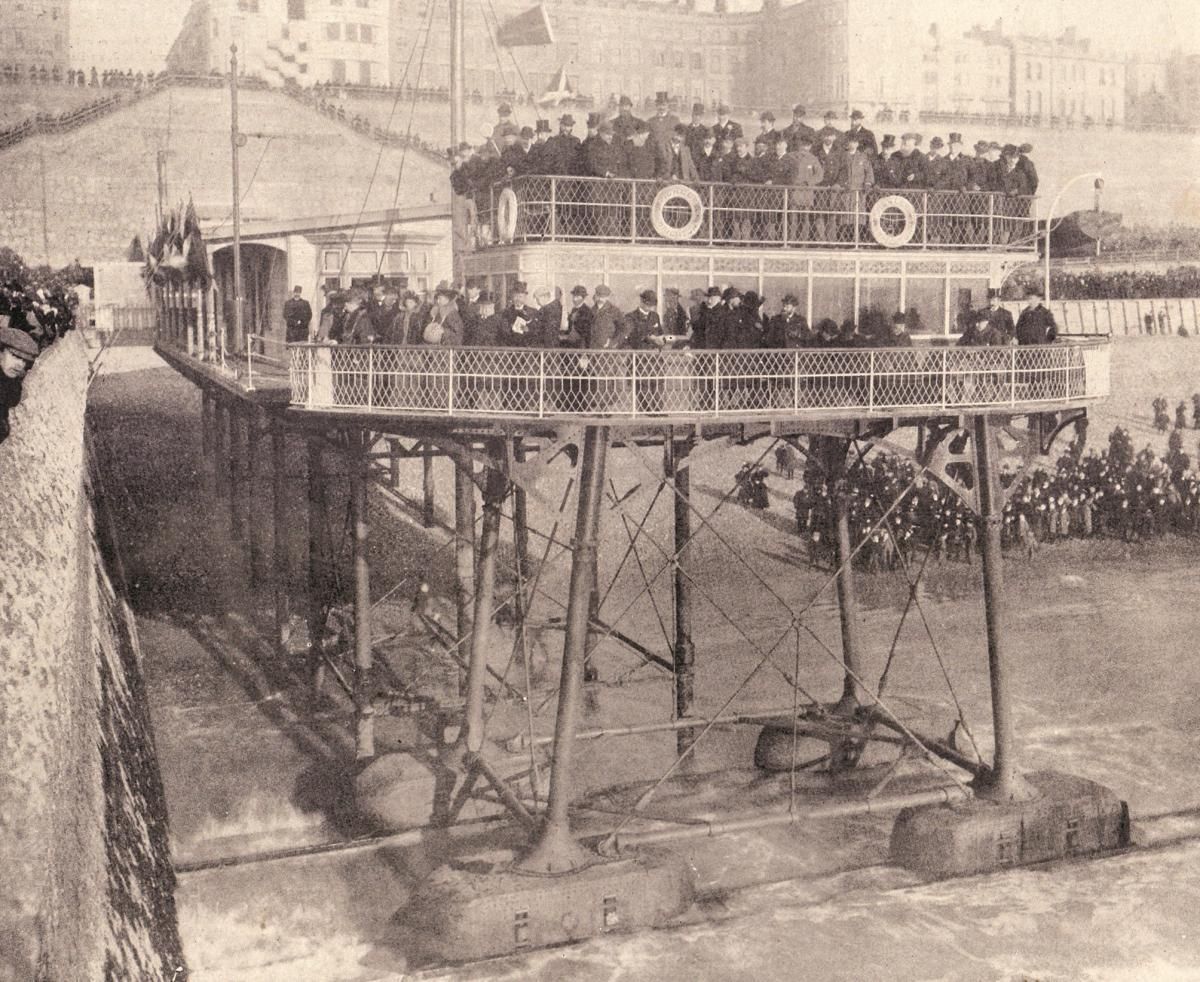
Perched high above the surf, a curious passenger platform rolls along on spindly legs, looking more like a seaside pier set loose than a conventional train. The crowded upper deck—packed with well-dressed riders—leans into the novelty of the moment, while the latticework railings and life rings add a distinctly maritime feel. Below, the sea churns around the iron supports, reminding you that this “railway” was built to negotiate tides, spray, and shifting sand rather than neat landlocked tracks.
Brighton’s Daddy Long-Legs Railway, introduced in 1896, sits at the intersection of Victorian showmanship and early electric ambition. The design reads like an engineer’s dare: a tram-like carriage elevated on tall columns, intended to glide across the shoreline and shallow water where ordinary lines couldn’t comfortably run. In the photo, the shore crowds and the clustered silhouettes suggest an attraction as much as a transport experiment—proof that new technology could be a day out in itself.
For anyone exploring unusual inventions and forgotten transport history, this is a standout chapter in British seaside engineering. The scene speaks to an era when electricity promised cleaner, quieter motion and coastal resorts competed with bold, headline-grabbing attractions. Whether you arrive for Brighton history, early electric railways, or simply the strangest train concept ever put on legs, the Daddy Long-Legs remains a wonderfully weird reminder that innovation often begins with spectacle.