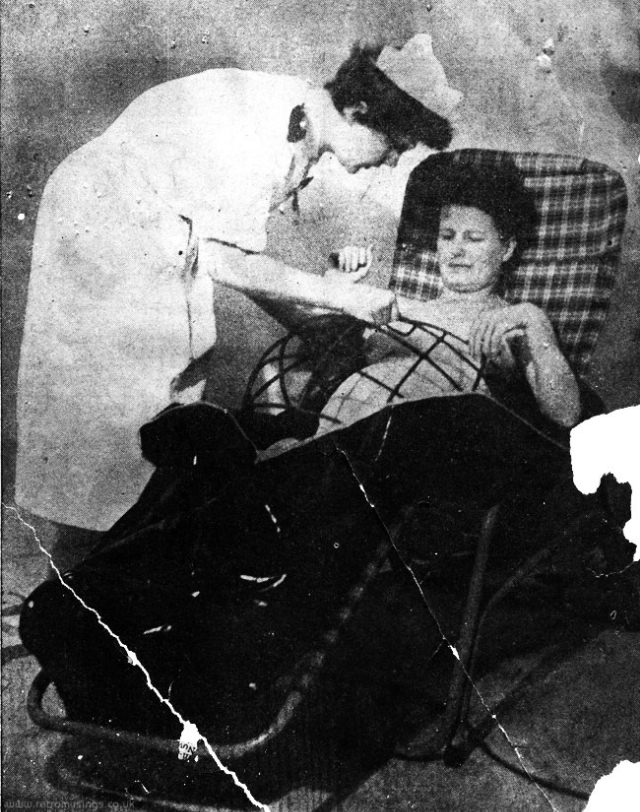
Mid-century optimism about science and comfort comes through in this striking scene: a nurse in a crisp uniform leans over a reclining expectant mother, adjusting a rigid, cage-like apparatus positioned over the abdomen. The mother rests in a padded chair, half-covered by heavy fabric, while the device’s curved bars suggest an attempt to “engineer” pregnancy into something controllable, measurable, and modern. Even without technical diagrams, the setup reads like a period experiment—part medical support, part futuristic prop.
Called the “Baby Machine of 1959” in popular retellings, the concept fits neatly into an era captivated by space-age design and new domestic technology. The so‑called “space suit” idea implied protection and assistance, hinting at a promise that gadgets could relieve strain, improve posture, or make prenatal care more efficient. Yet the photograph also invites questions about how comfort was defined, who decided what was best, and why so many inventions of the time framed motherhood as a problem to be solved.
For readers exploring unusual inventions, pregnancy history, and retro medical devices, this image offers a memorable window into postwar attitudes toward women’s health and innovation. The worn, creased print quality only adds to the archival feel, underscoring how experimental ideas often circulated through magazines and news features as much as clinics. Whether viewed as earnest ingenuity or a cautionary tale, the “Baby Machine” remains a fascinating artifact of 1950s space-age imagination applied to everyday life.