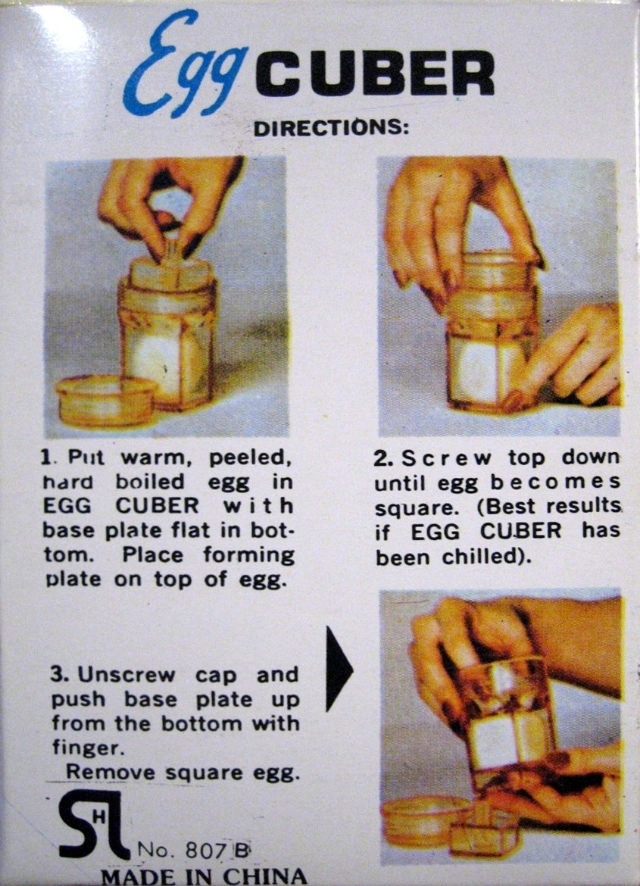
Bright lettering spelling “Egg Cuber” sits above a set of printed directions, the kind of packaging copy that once promised a small miracle for the modern kitchen. The photo frames a compact plastic device and a pair of hands demonstrating each step, turning the humble hard‑boiled egg into something unnervingly geometric. Even at a glance, it reads like peak novelty-invention culture: simple, confident, and slightly absurd.
Step-by-step text explains the process in plain language—place a warm, peeled egg inside with a base plate, add the forming plate, then screw the top down until the egg becomes square, with “best results” after chilling. The sequence of images shows the compression at work and the final reveal, when the cap is removed and the squared-off egg is pushed up from the bottom. It’s a charming reminder of how instruction panels once doubled as sales pitch, letting consumers imagine the transformation before ever trying it.
Kitchen gadget history is full of clever little contraptions like this, marketed as time-savers or conversation starters for parties, lunches, and perfectly arranged plates. The Egg Cuber’s promise isn’t about better flavor so much as spectacle—an everyday food reshaped to look futuristic, neat, and just odd enough to make guests ask questions. For anyone exploring 1970s inventions and retro food tools, this photo is a compact window into an era when novelty manufacturing and domestic aspiration happily met in one square egg.